Saturday, February 14, 2015

Hemingway's Footprint in Cuba Part 4: Hemingway the Writer

The Memorial at Cojimar
     Ernest Hemingway needed the income from his writing in order to support his many other adventures.  He was a war correspondent, a magazine and short story writer and most of all a Nobel Prize winning novelist.  All of his writing outlets were widely read and enjoyed.  His inspiration for many of his writings was his location and what he was doing at the time.  Cuba was no exception.  Inspiration for his most famous book The Old Man and the Sea, was the fishing village of Cojimar, just outside of Havana.


Ambros Mundos
    His third wife, Martha Gellhorn, inspired him to complete his most famous novel, For Whom The Bells Toll,  which he started in March 1939 and finished in July 1940.   It was published in October 1940.   Consistent with his usual pattern of traveling around when he was working on a manuscript, he wrote For Whom the Bell Tolls in Cuba, Wyoming, and Idaho.   For Whom the Bell Tolls became a Book-of-the-Month Club choice and sold half a million copies within a few months.  It was nominated for a Pulitzer Prize and re-established Hemingway as a literary icon.

Finca la Vigia
    The monies earned from For Whom the Bells Toll allowed him to purchase his beloved Finca la Vigia in 1940.   Hemingway lived in the house from mid 1939 to 1960, renting it at first, and then buying it in December 1940 after he married his third wife Martha Gelhorn.  Hemingway paid $12,500 for the property.   This was the place where he seemed to be able to remain inspired better than any other when it came to his writings.

Pilar at War
    In the years prior to the United States entry into World War II, he convinced the Cuban government to help him refit the Pilar, which he intended to use to ambush German submarines off the coast of Cuba.   After war was declared by the United States he went to Europe to be a war correspondent again.   In 1947, Hemingway was awarded a Bronze Star for his bravery during World War II.  Hemingway was recognized for his valor, having been "under fire in combat areas in order to obtain an accurate picture of conditions".    With the conclusion of the war, he returned to Finca la Vigia in January of 1946, where he began work on The Garden of Eden, finishing 800 pages by June.     During the post–war years, he also began work on a trilogy "The Land", "The Sea" and "The Air", which he wanted to combine into a single novel titled The Sea Book.  Both projects stalled, and  Hemingway's inability to continue was "a symptom of his troubles, believed to be bipolar, something that was not known in those years. 


The Tower at Finca la Vigia
     Hemingway met 19-year-old Adriana Ivancich in Venice.    The platonic love affair inspired the novel Across the River and into the Trees, written in Cuba during a time of strife with his then fourth wife Mary Welsh, published in 1950 to negative reviews.    The following year, furious at the critical reception of Across the River and Into the Trees, he wrote the draft of The Old Man and the Sea in eight weeks, saying that it was "the best I have written in all of my life" .  The Old Man and the Sea became a book-of-the-month selection and established Hemingway an international celebrity and won him the Pulitzer Prize in May of 1952.
     In October 1954, Hemingway received the Nobel Prize in Literature.  He modestly told the press that Carl Sandburg, Isak Dinesen or Bernard Berenson truly deserved the prize, but the  prize money would be welcome.    As he was suffering pain from the African airplane crashes, he decided not to travel to Stockholm.  He sent a speech to be read instead.
    Shortly after he received the Pulitzer Prize, he headed off for a safari in Africa.  Following two near fatal airplane crashes trying to get to Entebbe,  Hemingway and Welsh finally arrived in Entebbe to find reporters covering the story of his death.  He briefed the reporters and spent the next few weeks recuperating and reading his erroneous obituaries.
     He returned to Cuba in 1957 where he began to assemble a group of papers recovered from the
Then there was only the Empty Room and the Typewriter.
Ritz Hotel he left behind after World War II into his memoir A Moveable Feast
.   Hemingway  ended a period of intense activity in 1959.  He finished A Moveable Feast, extended  True at First Light to 200,000 words, added new chapters to The Garden of Eden and spent some time developing  Islands in the Stream.   The last three were stored in a safe deposit box in Havana as he focused on the finishing touches for A Moveable Feast.   It was during this period that Hemingway started sliding  into depression from which he was unable to recover.  The Finca Vigia became crowded with guests and tourists and Hemingway was becoming unhappy with his life there.    Hemingway bought a home overlooking the Big Wood River just outside Ketchum, Idaho and left Cuba for the last time.    ;o)


Friday, February 13, 2015

Hemingway's Footprint in Cuba Part 3 Following His Drinking Trail

La Tarraza in Cojimar
     Ernest Hemingway did a lot of things while in Cuba over the years, but he was probably most noted for his ability to consume large volumes of booze.  There are several establishments that he was known to frequent while in Cuba.  Some of the stories are true, and others are just made up for the benefit of the current owners to draw in customers   There are two establishments that I believe that he really enjoyed visiting.  The El Floridita in Havana and the La Tarraza in Cojimar.  These places, from what I've seen and read, were his "go to" watering holes.

Hemingway's Table at La Tarraza
     The La Tarraza is located in the fishing village of Cojimar just to the northeast of Havana where Hemingway kept Pilar.  Hemingway and Captain Fuentes would return from fishing trips and head straight for the La Tarraza for food and drink.  Today his table set for him and Captain Fuentes is still sitting in the corner with the views of the bay where Pilar would sit at anchor.


El Floridita


Daiquiri Central at El Floridita
      While living at the Ambros Mundos was the time that he discovered the El Floridita and its daiquiri.    Upon arriving at the corner of Obispo and Monserrate Streets, he was struck by the charm of the El Floridita, which called to him from its grand bar of precious hard wood. Owner, Constante Ribalaigua's wife, says that Hemingway came into the bar to go to the toilet. When he came out, the drinks that everyone was drinking attracted him. He tasted one and said: "That's good but I prefer it without sugar and double rum".   So Constante prepared it to his taste and served it to him saying, "There it is Papa". That's how the cocktail, which was named after him - the Papa Doble - was born.  Later grapefruit juice was added and that gave way to the "Hemingway Special".  

      El Floridita was his place to just relax and bring some of his many celebrity friends.  He could be found with the likes of the Duke of Windsor, Gene Tunney, Jean-Paul Sartre, Gary Cooper, Luis Miguel Dominguin, Ava Gardner, Tennessee Williams and Spencer Tracy.

     He was known to haunt several other places around Havana like Sloppy Joe's, where it is said that he took his friend Josey Russell and suggested that Josey rename his place in Key West after Sloppy Joe's in Havana.  He was also said to have visited the La Bodeguita del Medio, where he would supposedly drink his Mojitos.  This story has come into question in recent years, but the framed note still hangs on the wall.


     Like everything else that Ernest Hemingway did, he did his drinking in an epic manner as well. As you wander the streets of Havana today you can still sense his presence and follow his pathway through the bars and restaurants.  ;o)
Sign in La Bodeguita del Medio

Thursday, February 12, 2015

Hemingway's Footprint in Cuba Part 2 Fishing and Pilar

Anita in Key West
     During his days in Key West, fishing the Gulf Stream between Cuba and Key West is where Hemingway spent a great deal of time.  Along with his friend Josey Russell and others, he learned the ins and outs of fishing very successfully along the Gulf Stream.  The Ernest Hemingway "Mob" would all get together for fishing expeditions to the Marquesas and the Dry Tortugas on Josey Russell's fishing yacht "Anita". 

Pilar at Finca La Vigia
     Hemingway took his first sport fishing foray with his friend Charles Thompson, native and owner of a hardware store who loved fishing and hunting.   Going to the Marquesas, some 25 miles to the west of Key West. Ernest was ecstatic — he was finally fishing for sailfish, swordfish, tarpon, and marlin in the Gulf Stream. They fished by day, dined on fresh fish and conch by night.

Gregorio Fuentes

     Finally in 1934, Ernest Hemingway stopped off in New York to take a few meetings, after which he promptly went to Coney Island to visit the Wheeler Shipyard and make a down payment for his customized yacht.   Hemingway required modifications to the 38-foot vessel.  He added a live fish well and a wooden roller spanning the transom to aid in hauling fish aboard. He also requested extra large fuel tanks so he could stay at sea for longer periods of time. The boat had two motors - a 75hp for traveling and a 40hp for trolling.  And he requested a flying bridge.  The finished yacht cost $7500 and was brought to Key West and christened Pilar, a nickname for his wife Pauline.  

Pilar at Cojimar
     After his break-up with Pauline, Hemingway took his boat and moved to Havana and into the Ambros Mundos Hotel.  Pilar would have a new home in Cojimar, a small fishing village to the northeast of Havana.   There along with his friend and Captain Gregorio Fuentes, they would terrorize the fish between the Dry Tortugas, Cuba, Florida and the Bahamas.  Fuentes would captain Pilar until Hemingway left Cuba in 1960, and would finally pass away in Cojimar on July 13, 2002 at the age of 104. Their adventures together on Pilar were the inspiration for Hemingway's Old Man and the Sea.

     At the start of World War II, Hemingway volunteered for patrol off of Cuba looking for Nazi U-Boats.  In 1942 and ‘43, Roosevelt asked for volunteers to patrol off the Atlantic and Gulf coasts—as many as a thousand boats were assigned. The United States didn’t have enough Navy ships to cover these areas. The volunteers became known as the Hooligan Navy. 

     Hemingway was the only American civilian to patrol off of Cuba, where he was living at the time, and he had to get through a lot of red tape. But he was part of a huge surveillance network in place. You just never knew when the subs were going to come up. When ships in the Hooligan Navy spotted U-boats, they’d call for backup from the military.
   
Hemingway and Castro
    In May of 1960 just before Hemingway's final departure from Havana, he would receive a fishing award from Fidel Castro.   He left Cuba for the last time in July of 1960.  His beloved fishing yacht, Pilar has been restored for a second time and is on display at Finca la Vigia in San Francisco de Paula, just outside of Havana.

Wednesday, February 11, 2015

Hemingway's Footprint in Cuba Part 1 The Timeline

     After seeing an article in the Caribbean Journal, it reminded me how big Ernest Hemingway's footprint really left in Cuba.  From his first visit, a 3-day layover awaiting departure for Spain accompanied by his wife and two sons, until the day he left Cuba for the final time in 1960, his presence was huge.  

Pink Ambros Mundos
     On his first visit he stayed at the Ambros Mundos Hotel in Havana, a place he would call home when he returned to Havana in 1932.  Biographer García Marquez, said., "the writer's first refuge in Cuba was room 511 of the Hotel Ambos Mundos that he chose exclusively for the privileged view of the city that he could contemplate from the windows."     Hemingway would complete For Whom the Bells Tolls in Room 511.  Hemingway would remain at the Ambros Mundos Hotel until 1939 when he purchased Finca la Vigia - located just outside of Havana and in San Francisco de Paula - with the proceeds from For Whom The Bell Tolls.

   In 1960 when Philip Bonsall, the U.S. ambassador to Cuba and a frequent visitor, dropped by to say that Washington was planning to cut off relations with Fidel Castro's fledgling government, and that American officials thought it would be best if Hemingway demonstrated his patriotism by giving up his beloved tropical home. He resisted the suggestion, fiercely.   It is interesting that he only lived for about one year after departing Cuba for the final time.  

The Front of Finca la Vigia

     This is the first of a series that will give you a summary of the huge footprint that Ernest Hemingway left on Cuba.   : o)

Tuesday, February 10, 2015

Ernest Hemingway's "Papa Doble"

     The "Papa Doble" as it later became known was the favorite cocktail of the infamous writer Ernest Hemingway when he visited the El Floridita in Havana in the 1930's.  The cocktail has reappeared in many forms and variations over the years, but you can still enjoy the cocktail as it was originally made upon your visit to the El Floridita, hopefully soon, as they are promising travel opening up to Cuba in the near future.

    Phillip Greene in his book "To Have and Have Another", he talks about the cocktail and its origin.  He really has it right in my opinion. 


"E. Henminay Special" Daiquiri

  • 2 ounces white rum
  • 1 teaspoon grapefruit juice
  • 1 teaspoon maraschino liqueur
  • ½ ounce lime juice

"Frappe" (chip or crush) some ice, add to shaker, then add remaining ingredients. Shake well, then pour contents of shaker into a chilled cocktail glass.
     "Hemingway was the inspiration for this classic cocktail with the intentionally misspelled name served at Havana's famous Floridita bar, which the writer frequented in the early 1930s on visits from his home in Key West. The drink made it into the bar's 1937 cocktail manual, and a decade later, it evolved into the "Papa Doble," named for Papa Hemingway."
     This is not a daiquiri for the faint at heart, it is bold and very tart, but if you don't have to drink "sugar bombs" as your cocktail of choice, you might really enjoy this one.

Monday, February 9, 2015

"Conchy Tonkin" Down the Florida Keys

      Miami's Tasting Table Magazine featured a very interesting article about places to stop and see as you travel down the Florida Keys.   Jimmy Buffett did a song about traveling down the Keys called "Conchy Tonkin'", talking about a couple's fun trip down U.S. 1 and all the fun watering holes as they wander from Key Largo to Key West, this also adds the foodie places as well.  The trip is a fun one and if you are contemplating going to Key West, give some though to flying to Miami and rent a car and spend a day driving to Key West and experience the fun along the way.  The trip if you don't stop takes about 3 to 4 hours, but if you do it right it is an all; day affair and a whole lot of fun.  You can drop off the rental car in Key West and then fly back, but that journey is a great one, but you will consume a full day doing it.

    The article mentions many of the fun watering holes along the way and where to stop and have a fun well made cocktail as well.  Last April two friends and I did a day long ride to Miami hitting many of the fun places along the way and had a really fun time of it.  There are literally hundreds of places to stop to see, eat or drink, but you won't be able to take in all of them on any given trip.  

    I'm proud to be a part of the article along with The Rum Bar in Key west as well.  "Key West's Mallory Square On your way to snapping a priceless photo at the famous Southernmost Point buoy, pay a visit to rum savant and local mini-celebrity Bahama Bob at his quaint The Rum Bar at the Speakeasy Inn. If there ever was a time and place to indulge in a Painkiller ($8), this would be it."

     You can read the entire article at  http://www.tastingtable.com/travel/miami/best-places-to-eat-drink-stay-and-see-florida-keys-mia#ixzz3Qxrno5DM

     Take the ride to the end of the road and see all of the really fun places and great vies of the ocean as you drive down the Florida Keys and be able to look out one side of your car and see the Atlantic Ocean and the Gulf of Mexico out the other side as you cross the bridges to Key West, especially the "Seven Mile Bridge as you leave Marathon.  Take the trip, you'll never forget this one.  ;o)


Sunday, February 8, 2015

The Winter Means Staying at Home

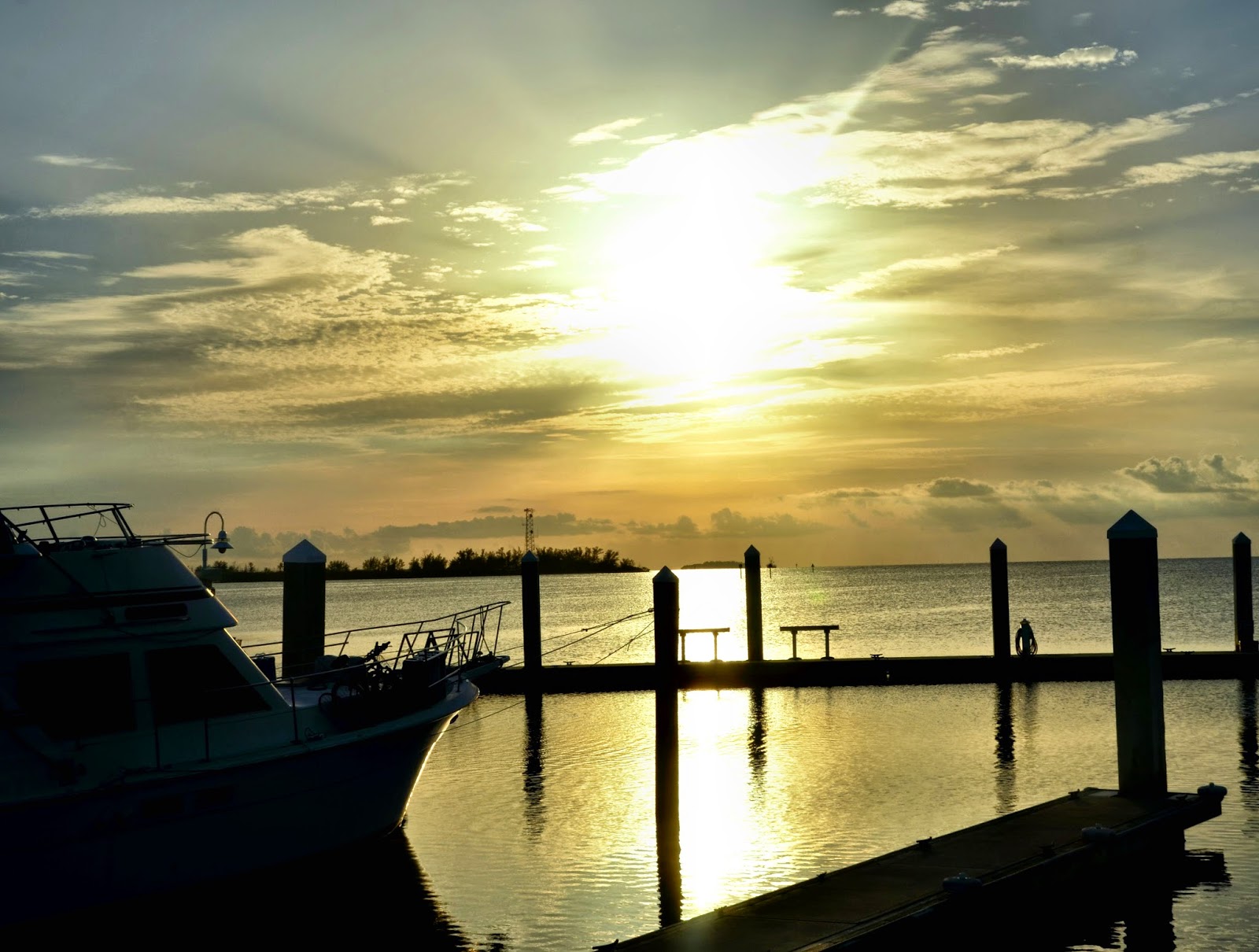
     The winter with all of the wind and cooler weather has kept me home more than usual.  This is not all bad, because I have been able to finish writing the second edition of my cocktail book.  "Bahama Bob's Cocktails and Tails Toois headed to the printers next week.  This has forced me to only escape the computer and the boat in the evenings for the past few weeks.  The sunsets have been nothing short of spectacular and made the end of the days even more rewarding.  Tuesday night at the Hurricane Hole, this is how the day slipped into night. 


Saturday, February 7, 2015

Richard Seale: On the Subject of Sugar Added to the Rum


    Richard Seale of Foursquare Distillery on Barbados, is one of the most respected rum producers in the world.  He has always produced some of the most flavorful and honest rums available.  His strong beliefs that the rum does not need the addition of sugar in order to make it palatable to make it sell.   He has long believed in the use of barrels and blending as the means of making premium rums that are the "Real McCoy".   Here is part of an interview with Richard Seale as presented by Peter Holland.


Ladies and gentlemen, please welcome Richard Seale
 

RS: Last December I rather stirred a hornet’s nest revealing (via Facebook) the extent to which many rum brands have added sugar. I make no apologies for this; it is a subject that needed to be raised. The bitter truth (pun intended) is that many rum bloggers, journalists and other rum opinion leaders were oblivious to this fact. Some feign now they “always knew” but they are only fooling themselves. The reactions were interesting and generally fit two camps; horror or denial. Of greater concern to me is how the debate has been “spun” the wrong way (that is actually part of the denial mechanism) and I thank Peter for an opportunity to get this necessary debate back on track. 

Let’s start the discussion where we should have some common ground.  The status quo is unacceptable. By that I mean both the obliviousness of the “experts” and the generally ‘free for all’ that exists in the market. So if the producers will not provide the necessary transparency (if its “all good” what are they hiding?) then we must look to the testing of Systembolget and Alko Finland for our information as well as the excellent work of Johnny Drejer who has published his own test results on the web. The days where the rum community are uninformed and accept the denials of the producers at face value are hopefully over. 

“Denialists” have struggled with the revelations. They have tried to discredit the results (of the Swedes and the Finns? good luck!) or run to their favorite brand spokesman for an explanation (him or her having hitherto denied sugar). I have heard some spectacular claims; “many things affect density” and “the sugar comes from the barrel”. For the former, only dissolved solids affect density in a distilled spirit and if not sugar, do enlighten us please. For the latter, a curious phenomenon not seen say in Whisky or Jamaican Rum (or any other spirit) apparently, do explain why. I have heard the moronic refrain; “I like sweet rums”. No, actually, you like sweetened rum. Big difference. The nuanced world of sweet and dry rum is sadly lost to you. Another asinine comment; “do not tell me how to drink my rum”. Actually it is the producer who is premixing the rum that is denying you that privilege (you do understand once you buy it, it's yours to do as you please, right?). It is disappointing that some opinion leaders have tried to trivialise a serious issue. I will elaborate later on why it is so important.  

Transparency while important at this stage is not enough. We need resolve on this issue. Some have suggested having producers declare sugar on the label (I am amused some are brave enough to continue to trust producers, there is an old saying; “fool me once…”) I do not consider this acceptable for two reasons. Firstly, we are making a distilled spirit. It does not and should not contain an ingredient list [Note: not even caramel? – Pete]. I do not see an ingredient list on Whisky, on Cognac or even fermented products like beer and wine.  This cannot be a serious option and will make a mockery of the rum category. Secondly, a declaration is only meaningful to an informed consumer. Most consumers frankly will not know what to make of it.  

There is no need to reinvent the wheel. The correct solution in my view, where sugar might be allowed, is a limit or cap as is practiced for Cognac. If the category has a cap, there is no need to have a declaration. We are effectively saying we have restricted adulteration in such a way that the product remains essentially as it is declared; rum. A cap should be moderate enough that the potential difference between brands is so minor that the consumer cannot be mislead by the absence of a declaration on the label. Many sugar apologists are quick to point out that sweetening of spirits is legal in the EU, they usually omit to mention that the EU standard requires a “maximum level” set by the “member states”.  

Proponents of using sugar in Rum, those at least who have the decency to admit to the practice, argue a “small touch of quality sugar acts as natural flavor enhancer”. Therefore, this practice should not conflict with a cap. When I look at the Alko Finland test results on Cognac nearly every brand has less than 10g/l  (the very best have none) and a cap at no higher than this level (just a “touch” after all) should be quite acceptable to any legitimate practitioner of sweetening. 

The sugar issue has been regrettably spun as a “partisan issue” but this is neither accurate nor fair. For many producers e.g. Barbados, Jamaica, Martinique sugar is an illegal adulterant. This is not molasses v juice or column v pot or tropical v temperate, this is legal v illegal. Sugar proponents and I do not have opposing views on sugar; we all agree it is a flavor enhancer. It is how we respond to that fact that differs. For proponents, because it is an enhancer it is ok (even positive) to add but for us because it is an enhancer it is not ok. It is an illegal adulterant for Barbados (or Jamaica) because the authorities view a flavor enhancer as an affront to the integrity of the spirit. We agree with them. Barbados and Jamaica have very special places in the history of rum and it should be obvious the need to protect this integrity. 

However if we are to believe the very seductive story of using “ancient techniques” and “a small touch” or “dosage” of sugar then we must check if this currently accords with reality. Johnny Drejer tested some 73 ultra premium rums and only found 12 without sugar (no surprise they mostly came from Barbados, Jamaica and Martinique). More disturbingly 53 (87%) of the 61 rums with sugar had more than 10g/l a limit rarely exceeded in Cognac. 48 (79%) of the 61 were at or higher than the legal limit for Cognac. Most of these rums carried ‘double digit’ age claims and several claimed over 20 years of aging. In direct contrast to Cognac, the more premium, the more sugar seems to be the trend. Bacardi Superior – zero grams (source: Alko Finland) but Zacapa Gran Reserva – 41 g/l (source: Systembologet). Hennessy VS has 9g/l (source: Alko Finland) while in contrast Hennessy Paradis has none. Remy’s Louis XIII of course has none (source: Alko Finland) likewise Courvoisier L’essence (price £1,685) also has none (source: Alko Finland). 

Rum has borrowed a convenient story from Cognac but the reality is very different. The “dosage” story is simply not a credible one with Rum producers. It is nothing more than marketing spin. Rum producers are typically using between three and five times more sugar than found in Cognac (and whisky is doing just fine without any!). Legitimate sugar proponents have likened sugar to “salt in a great dish” and if I borrow this analogy then compared to Cognac, rum apparently is like bland soup, needs a lot more ‘salt’!


So what is going on here? 


Whenever anything of great value is created there exists an opportunity for ‘counterfeiting’. By ‘counterfeit’ I mean ersatz or spurious. Not a ‘knock off’ but something pretending to be what it is not. The problem in rum is that counterfeiting is legal and worse largely enthusiastically welcomed by the rum community (the bloggers, the journalists, the enthusiasts etc). They are like Justin Bieber fans, they are believers. Overnight brand with incredible double-digit age claims? No problem, apparently they were waiting for the “right time”. Color like coca cola? Apparently from those same years in the barrel, duh ! Smells like sherry? Must therefore be good rum! Industrial production? Lots of shiny stainless steel equipment must mean high “quality”.  

It looks good (package included) and it tastes good, ergo it’s the good stuff. It is not difficult to look at the rum reviewers and find the correlation between sugar and high approval and vapid criteria like “smoothness” and “afterburn”. The seductive sweet taste is enough to be convincing of quality (and premium value). It makes the outrageous age claims believable and is the indispensable tool of the counterfeiter. So oblivious to sugar are rum “experts” that they think nothing amiss in a competition where an agricole and a Jamaican might fall either side of a South American ‘sugar festival’ as they hold dearly to the banal categories of white, gold, aged etc. Little wonder the counterfeit fits in like a sublime party crasher. When these “beliebers” are grown up, they might figure out to compare rums by style and set aside trite sugar bombs as not worthy of evaluation at all (and hopefully listen to Pink Floyd).   

That many great producers also use sugar unfortunately only conflates the issue. It also makes my wading in on the issue fraught with danger of misinterpretation (and worse). There is little doubt in my mind that the existence of the ‘counterfeits’ forces many of these producers to use more sugar than otherwise. If sugar were in fact simply a “partisan” issue of “dosage” I doubt it would be in anything more than the most esoteric of discussions. Legitimate practitioners of “dosage” or even idiosyncratic rum producers and I are really on the same side.   

Now here is a bit of irony. I will likely be condemned for daring to call out ‘counterfeits’ but the rum community is happy to throw around the inane moniker “sipping rum”. Apparently, according to the experts, much rum, if not most, is in fact undrinkable! A rum merely reaching palatability is worthy of elevated status. Other rums must be appropriately drowned in “mixers” so we can bear consumption. There are few terms that encapsulate rum’s colonial inspired inferiority complex and the community’s own immaturity than this vacuous descriptor. There is just rum, some good and some less than good.  

Last year at Tales of the Cocktail during a seminar I presented two rums, one was an industrial produced purported “super premium” brand with a double-digit age claim and great reverence in the rum community. The other was an un-aged rum suitably colored, doctored and sweetened. The knowledgeable rum audience was unable to distinguish between the two and over half of the audience present preferred my ‘counterfeit’ (Note, I agree with their choice). Without sugar, this feat could not be done. More importantly with sugar, it was easy. We need to be careful that the difference between rum and “sipping rum” is not a “dosage” of sugar. 

This result occurs because rum has an identity crisis. In Cognac production, we have the alembic; in whisky we have the blend of pot and coffey still, in Armagnac (or American whisky) the single column. These ‘beverage stills’ are essential to retaining the authentic character of the spirit. In Vodka, we have industrial production via multi column ethanol plants. In Rum we have them all and the problem is we do not understand the proper hierarchy. Nor is authentic rum character well defined. The raison d’être of the great spirits is the raw material (producing the wine) and production without a ‘beverage still’ (pot, single column, coffey still) is the antithesis of intrinsic value or authenticity. To facilitate the rum story without a beverage still, distillation has been conveniently spun as a function of abv as if spirit and ethanol are easily interchangeable. I will save the details of the necessary correction of this terrible falsehood for another article. Industrial production, contrived flavour, surfeit colour and overwhelming sweetness are the signatures of the ‘counterfeit’. The famous rum brand I discreetly mocked at Tales was chosen carefully. It was not an excellent but idiosyncratic rum producer who used sugar.  It had all the ‘qualities’ of the ‘counterfeit’. Demonstrably so!  

Vested interests in the status quo have argued that better rules will stifle diversity. This is patently false. We have the greatest diversity in rum from the territories with the best and most effective existing regulation for example contrast rum from Barbados with Jamaica and Martinique. Elementary rules on distillation, age, color and adulterants are the basics of maintaining the integrity and identity of the category. Does anyone really believe that the stringent rules of Bourbon and Scotch whisky hamper their success? Whisky has both global diversity and strong regulation. Regulation does not stifle diversity it protects it. 

Opinion leaders in rum need to make a decision. Will they demand rum to be a great spirit of real intrinsic value and authentic character or will it be a product of “smoke and mirrors” like vodka where value is perceived rather than real. They need to do more than tell us “it tastes good”. After all, do we really need expert advice to decide that? Surely buying what we enjoy drinking is a given. They need to tell us if it worth paying for. Dealing properly with the sugar issue and understanding the proper hierarchy of spirit making is a critical juncture in this question. Rum will continue to fare poorly against whisky and cognac if it does not match their clarity of communication and delivery of real value to the consumer.  To reduce the sugar issue to one of “partisan views” and leaving it “for our palette to decide” is to misunderstand the issue.  

I hope to have contributed to a better understanding.
 
I just wish to thank Peter Holland for putting this together so we can better understand the facts in this controversy in the rum world today.   ;o)

Friday, February 6, 2015

Sobriety Test to Enter a Club?


    Some of the clubs in London are trying a mandatory breathalyzer test prior to entering many of the clubs.  This has potential, as a bartender, I appreciate not having to deal with customers that are three quarters in the bag when they arrive.   It is aimed at cutting down on the problems of alcohol related violence and aggressive behavior in the clubs.

London Clubbers Must Pass Sobriety Test for Entry in the Future
     London clubbers may need to forgo drinking altogether to ensure they gain entry to nightclubs in the capital.  
     Introduced as part of a Metropolitan police scheme to crack down on aggressive, alcohol-related
behavior, the breath test will give door staff a clear reading if clubbers are intoxicated before entry.  Currently being trialed in Romford and Croydon, door staff are using the devices to refuse entry to anyone more than twice England’s legal drink-drive limit, which is currently 35 micrograms per 100 milliliters of breath.   Chief Inspector Gary Taylor told the Evening Standard: “In the past door staff would get involved in long arguments with people who were refused entry. People who were arguing with staff were more likely to accept the results of the breathalyzer.”  The breathalyzers were introduced to Croydon this weekend (30 January), and will be rolled out to other parts of London if successful.  
Read more at http://www.thespiritsbusiness.com/2015/02/london-clubs-use-breathalysers-to-refuse-entry/

     This is being done with the approval of most of the club owners and has the support of the police department as well.   I think that this will be the wave of the future at many of the better clubs even here in the United States in the near future as well.   ;o)

Thursday, February 5, 2015

Bacardi Has Introduced a "Bartender Friendly " New Bottle

     Bacardi introduced yesterday its new ergonomic bottle for the top three expressions.  The new bottle will also reflect new names for the brands the remind us of their Cuban roots.  The bottles are taller and better balanced for bartenders to pull them off of the speed racks behind the bar.


     Caroline Hipperson, Bacardi global brand director, said the global launch of the new bottles today marks Bacardi’s “Founders Day”, the anniversary of the birth of the business in Cuba in 1862.  “Our vision was to create a bottle that told the story of Bacardi, its unique heritage and the masterful crafting that goes into the creation of each of our premium rums; one that makes bartenders proud to pour Bacardi rum for the next 150 years,” she said.
     The new labeling has brought back the Iconic "Bacardi Bat" to the label as it continues to go back to its roots in the way they are presenting themselves.  The new bottle marks the first time that a bottle was made for the needs of the bartenders that handle it every day.     “The new bottle shape is taller and slimmer with improved weight distribution, all designed to enable bartenders to grab the bottle more quickly from the speed rail.”
     The public and the bartenders are expected to be able to see these new bottles and labels in April of this year.  I'm looking forward to getting to the Miami Rum Festival this year where I'm sure that they will be on display for us to handle and see the new labels.


Wednesday, February 4, 2015

Do You Know Myth from Facts about Alcohol Use?

     As a bartender, I hear all of these myths and magical things that alcohol will or won't do.  The rationalizations that people give me on why they are drinking what they do, or better yet, how they won't have a hang over the next morning,  I hear a new myth nearly everyday that I stand behind the bar.  

     I ran across an article that was run in "The Telegraph" last month that gives you a chance to see what you really know or don't know about the facts about alcohol.


     Test your knowledge of alcohol-related risks and find out the facts about drinking.

     There are so many stories around alcohol and drinking that it’s hard to know what to believe.   Being informed about the facts is the best way to make sure that you drink safely.   Take this test to see can you tell the fact from fiction when it comes to booze myths.

     This is really fun, I did get one answer wrong.  See how well you can do on this test.  ;o)


Tuesday, February 3, 2015

Avua Cachaca Amburana

     Avua Cachaca Amburana is an unusually smooth with a lingering flavor that is rarely found in your run of the mill cachacas.  This one is hand crafted and aged in amburana wood casks, a wood that is unique to the forests of Latin America for up to 2 years.  The use of these very special casks produces a  savory and warm notes for the palate to enjoy.  Most cachaca is unaged and usually quite rough in its nature.  Avua  Cachaca Amburana is like no other cachaca that your will ever taste.

     "The Avuá Amburana is another thing entirely: It's mellow and smooth from aeration in the wooden tank, but the compounds the spirit pulls out of the wood are anything but familiar.  The strong woodiness oak brings in is gone, replaced by juicy black-cherry and spicy caraway notes.  The sugarcane funk is still there but softened and diffused.  This is a pure sipping spirit and one unlike anything made anywhere else in the world." - Dave Wondrich, Esquire

     Avua  Cachaca is a true vintage spirit, it is made is small batches that are aligned with the harvest time for the sugar cane.  The also have issued a statement to this end.  "As with fine wine, our product is produced in an annual growing season and will exhibit differences from batch to batch due to differences in water retention, cane composition and harvest factors.  Each of our batches is clearly numbered on batch and bottle numbers – and once they are gone they are gone forever.  We stand behind every bottle that we put into the market as being of the highest quality cachaça to be found throughout the world."

      The idea of a sipping Cachaca is a little bit odd, but Avua Cachaca Amburana is truly in a class by itself.  It is truly a sipper and the long lasting finish lives you completely surprised as the flavors slowly fade away.   ;o)