Saturday, June 18, 2011

The First Checker Cab

1923 Checker Cab
     The first Checker Cab was produced by Checker Cab Manufacturing Company of Kalamazoo, Michigan on this date  in 1923.     And why is that an important thing to a Rumstyler?     A good rumstyler is a responsible drinker and takes cabs home when they have had too much to drink, and a little history about  the early and very important cab marques is something of interest.

     Morris Markin (Checker Cab)and John Hertz (Yellow Cab) were the two major mogul in the Chicago and New York taxi business in the early days.     The story of the cab companies is a long and drawn out battle of "fare wars" and anti-trust suits, but a colorful past has only lead to a service that all of us rely on on a fairly regular basis.    

     What is this all about any way, a slow Saturday that lacks a good story, or is there something else behind the production of the first Checker Cab?     I guess it is your decision as to what I have in mind.    The real important thing is to use the taxi when you are not in a condition to drive, the life you protect might be mine.   ;o)

Friday, June 17, 2011

June 17th National Flip-Flops Day

     This day is a charity promotion for "Camp Sunshine", www.nationalflipflopday.com  a very good cause helping terminally ill children by the "Tropical Smoothie Cafe", it brings up a subject that is of interest to my tropical nature.

Japanese Zori Sandals
      There is evidence that a piece of footwear similar to the flip flop was worn as far back as the "stone age".     Many of the early sandals were made of papyrus, rawhide, straw or other materials depending on the region.     The flip flop as we know it appeared after World War II when many American soldiers brought back Japanese Zori sandals to use as slippers around the house.     These were very comfortable and a proud souvenir to wear indoors, but not to be worn outside.   In the 1950's, there were Zori made of rubber that could be seen on the feet of American beach and pool feet, but still no where else.   

The dreaded blow-out
     It wasn't til the 1960's that the sandal named for the popping sound of the sandals as people walked became a household name.     Called "Flip-Flops" in the continental United States, they were also known as "Thongs" and "Slippers in other parts of the world.     The marvelous little sandal that had swept the country was not only comfortable, but a symbol of "Casual" which was the sign of the 60's.     There was one flaw to the sandal though, the "flat tire", the toe strap would either break or pull out and you would be limping home.
Huarache Sandals
     Being of the "surfer persuasion", I went with the Mexican Huarache Sandals that were made of old tires and leather that were "bullet proof" and really cool among the shoreline group.     There are reports of these sandals lasting 10 to 20 years, mine didn't, because of the salt water and leather makes leather rather brittle and the uppers wore out, but the soles are forever.    


The Original 'Flip-flop"
      Today as I walk making the obligatory slip-flop sound as i wander around Key West, I also hear and see the results of the the work done in the 60's by a Brazilian company Havaianas to create and promote the original flip flops that we know and love today.     The ones that I wear today have a big toe protector and good arch support, but "flip-flops" none the less, and my go to footwear.    Keep on Flip-flopping as they are very much a part of rumstylin' to me.     ;o)

Thursday, June 16, 2011

The Cuban Daiquiri

here we go a gain with another famous cocktail that has a very unusual origin.      They say that an American, Jennings Cox invented the cocktail as a result of running out of gin when he was entertaining American guests in the late 1800's in Cuba.     He also happened to be an engineer at the Spanish American Iron Company mine located in the Village of Daiquiri.  Any guesses where the name came from?     This was pretty much a local drink until a navy Admiral Lucius W. Johnson ( Medical Officer) tried his cocktail in 1909, and he introduced it to the Army and Navy Club in Washington D.C.     The spread of the cocktail increased rapidly throughout the next couple of decades.     Like all stories over the origin of a cocktail there is some dispute as to weather he had some assistance from another Cuban engineer named Pagliuchi, or if the drink was an existing Cuban speciality.    

     Jennings original recipe was just the beginning of a string of recipes most more complex in nature, in the daiquiri family.    
     Jennings Cox's Original Recipe
  • 1.3 oz. light dry Cuban rum
  • .7 oz lime juice  
  • 1 teaspoon sugar
  • 4 crushed ice cubes
Mix the ingredients in a shaker and serve.

     There are many other versions of the daiquiri that have arisen including the soda shoppe slurpee stuff sometimes found in speed bars today.     However there are still a few good bartenders that know the meaning of a good daiquiri.     One of the other really good daiquiri's in the one that was made for Ernest Hemingway at the El Florida in Havana.
     Hemingway's Daiquiri
  • 2 oz. White Rum
  • 3/4 oz fresh lime juice
  • 1/2 oz fresh grapefruit juice
  • 1/2 oz Luxardo Maraschino Cherry Liqueur
Fill a cocktail shaker with ice add all the ingredients and shake till thoroughly chilled and strain into a cocktail glass and garnish with a lime.

The basic recipe of a daiquiri is 1 strong , 1 sweet, and one sour, these are the directions of the early days of Cuban cocktail mixing, but things got more serious as to the ratios with time.    Today the Daiquiri has shown a resurgence in America especially in the South Florida area.     Should you be in Key West stop by the Rum Bar for some Daiquiri lore and some creative "Keys Daiquiri's".     ;o)

Wednesday, June 15, 2011

The Rum Swizzle from Bermuda

The Swizzle Inn Bailey's Bay Bermuda
The Rum Swizzle is the "National Drink of Bermuda", but it's history is a bit cloudy like most of the really good cocktails.     Swizzles have appeared in literature since the late 1700's from places like Fort Ticonderoga, New York, Saint Kitts and Great Britain, Bridgetown, Barbados in the mid 1800's, as well as St. Thomas, U.S. Virgin Islands in the early 1900's.     These early versions of the swizzles were typically mixed with a v shaped stick that was rotated with the palms of your hands.    Most of the swizzles contained rum diluted with water and some aromatic ingredients added. 

Today's Rum Swizzle is said to have been created at the Swizzle Inn  in 1932 and so they say the "rest is history".    The motto of the Swizzle Inn is "Swizzle Inn, Swagger Out", and also known as the "Home of the Rum Swizzle".     Different bartenders like all another cocktails have different interpretations of the Rum Swizzle, but most of them have Gosling Black Seal Rum, a Gosling Barbados Rum (One that I haven't been able to find in the U.S.) fruit juices ( Orange, Pineapple, and Lime) and a flavored sweetener like falernum or grenadine.     The drink is often make in a "pitcher" batch and then strained into a cocktail  glass with an orange and cherry garnish.  

     There seem to be a few recipes out there in publication, but the Original from The Swizzle Inn seems to be the most realistic.
               Rum Swizzle  
  • 4 oz. Gosling's Black Seal Rum
  • 4 oz. Gosling Barbados Rum
  • Juice of 2 Lime Juice
  • 5 oz. Pineapple Juice
  • 5 oz. Orange Juice
  • 2 oz. Bermuda falernum
  • 6 dashes Angostura Bitters 
Mix in a pitcher with crushed ice, shake vigorously until a frothing head appears.     Strain into a cocktail glass and garnish with a orange slice and a cherry.  ( Serves 6)

     A later version sourced from Gosling Brothers Ltd.:

        Bermuda Rum Swizzle
  • 2 oz. Dark Rum
  • 1 oz. Lime Juice
  • 1 oz. Pineapple Juice
  • 1 oz. Orange Juice
  • 1/4 oz. Falernum
Shake all ingredients wit Ice and strain into an ice filled highball glass, and garnish with an orange and a cherry.

     There are other recipes that use simple syrup or grenadine to substitute for the falernum, but those ingredients are not the same.     There is really no substitute for the falernum.   Falernum is rather hard to find, but it is available as an alcoholic (J. D. Taylor's Velvet Falernum) or a non-alcoholic (Fee's Falernum Syrup) version, and either will make a fine drink.     This is another of the classic cocktails that can be done with relative ease at home or be made in the bar for your enjoyment.    Stop by your favorite tropical bar and ask for one, it they don't have the recipe, you do so show them so they can make it for you.     ;o)

Tuesday, June 14, 2011

The Goombay Smash

     There is controversy over The Goombay Smash's origin as well as the origin of many other popular cocktails.     Smashes are not a new concept, the early ones resembled a mojito, and were made with gin, rum, or whiskey.   The more modern ones contain fruit juices and are made for the most part with rum.      The most popular and probably the most believable of the stories of who created it is that Miss Emily at the Blue Bee Bar in New Plymouth, Green Turtle Cay, Abaco, the Bahamas was the originator.     The other is it was created a fellow named Bernie at a bar in Killington, Vermont Ski Area.     You get to believe which of the stories is true for you, but as for me and on the strength of having had a Goombay Smash at Emily's Blue Bee Bar, and the volume of places in the Bahama's that serve their interpretation of the drink it is hard to believe that it was created anywhere else.

This is one of those drinks that has as many versions of the Goombay Smash as there are bartenders.     There are 3 common threads in the majority of them, Coconut Rum Apricot Brandy, and Pineapple Juice.     From there the recipes vary tremendously.      The drink as a light and flavorful touch that brings together several flavors in a very refreshing and harmonious fashion.      The drink is to the Bahama's what the Painkiller is to the Virgin Islands, you will find them at every bar and slightly different in the ingredients they contain, but most of them are very good.  

The rum specified for this drink is usually a "dirty rum" meaning a amber or dark rum, but it could also mean a spiced or gold rum.   That term seems to fit any rum that isn't a blanco or white rum.     The original recipe is a secret, but it is believed to contain:
  • Coconut Rum
  • Apricot Brandy
  • "Dirty Rum"
  • Pineapple Juice
Many of the interpretations that I have run across in the Bahama's, the Virgin Islands, as well as in the United States is something very close to this:

  • Coconut Rum
  • Apricot Brandy
  • Dark Rum
  • Pineapple Juice
  • Orange Juice
All of the ingredients are shaken in a shaker with ice and poured into a Collins glass and garnished with a orange and a cherry.

     There are, like I said as many recipes as there are bartenders, so find one that fits you and sit back and enjoy it.     By the way thank Emily for this fine cocktail if you should happen to get by the Blue Bee Bar.   ;o)

Monday, June 13, 2011

Quirky Key West and the Pride Prade


     Key West is well known for being a quirky town and it will have a parade to celebrate things that are important to it's residents.     This week is "Gay Pride Week", and it culminated with the "Pride Parade"  every year.     This is one of the more colorful parades and one of the more fun parades that happens here in Key West.     This is best told in pictures, so that is what I am going to do. 


Like I said, a picture is worth a thousand words and I guess that these just about say it all.     Congratulations to the Gay Community for putting on a great event this past week and I sincerely hope that everyone involved had a great time.   ;o)

Sunday, June 12, 2011

Sunsets Make me Smile


There is nothing like a beautiful sunset from the back of the boat to make me smile and feel totally relaxed at the end of the day.     ;o)

Saturday, June 11, 2011

The Train Came to Key West.

Old and the New Seven Mile Bridges
     It was called the Eighth Wonder of the World at the time and today the highway that it spawned is still right up there as an engineering marvel.     This was the Henry Flagler's idea to be able to take advantage of the United States closest deep water port the the Panama Canal and to take advantage of the Cuban and Latin American  trade potential.    


     Shortly after the announcement of the construction of the Panama Canal in 1905, Flagler became interested in connecting Key West to the Mainland.     Initially it was called "Flagler's Folly", but at it's completion in 1912 a proud Henry Flagler rode aboard his private rail car on the first train to Key West.     The project came with a steep price tag of money and very special engineering innovations.    There were three hurricanes that threatened the project, and a final price tag of more that $50 million.    


     The demise of the Overseas Railroad came on Labor Day, 1935 when a category 5 hurricane, later labeled "The Storm of the Century" devastated Long Key and the adjacent areas.     Much of the Overseas Railroad was heavily damaged by the storm as well as the Florida East Coast rescue train that was blown over with the exception of the locomotive by the storm surge.     The already bankrupt Florida East Coast Railway was unable to financially recover and rebuild the road bed and the bridges, so they sold the entire line to the State of Florida who built the Overseas Highway using the road bed.

     The impact of "Flagler's Folly" on the Keys sis still being felt today, from the ability to drive to and from the mainland and bring goods by truck on a daily basis is something that the Keys can not do without.       We will be looking at some of the other effects of the Overseas Railroad in future articles.     


Friday, June 10, 2011

Florida Caribbean Distillery:Florida's Giant Spirits Center

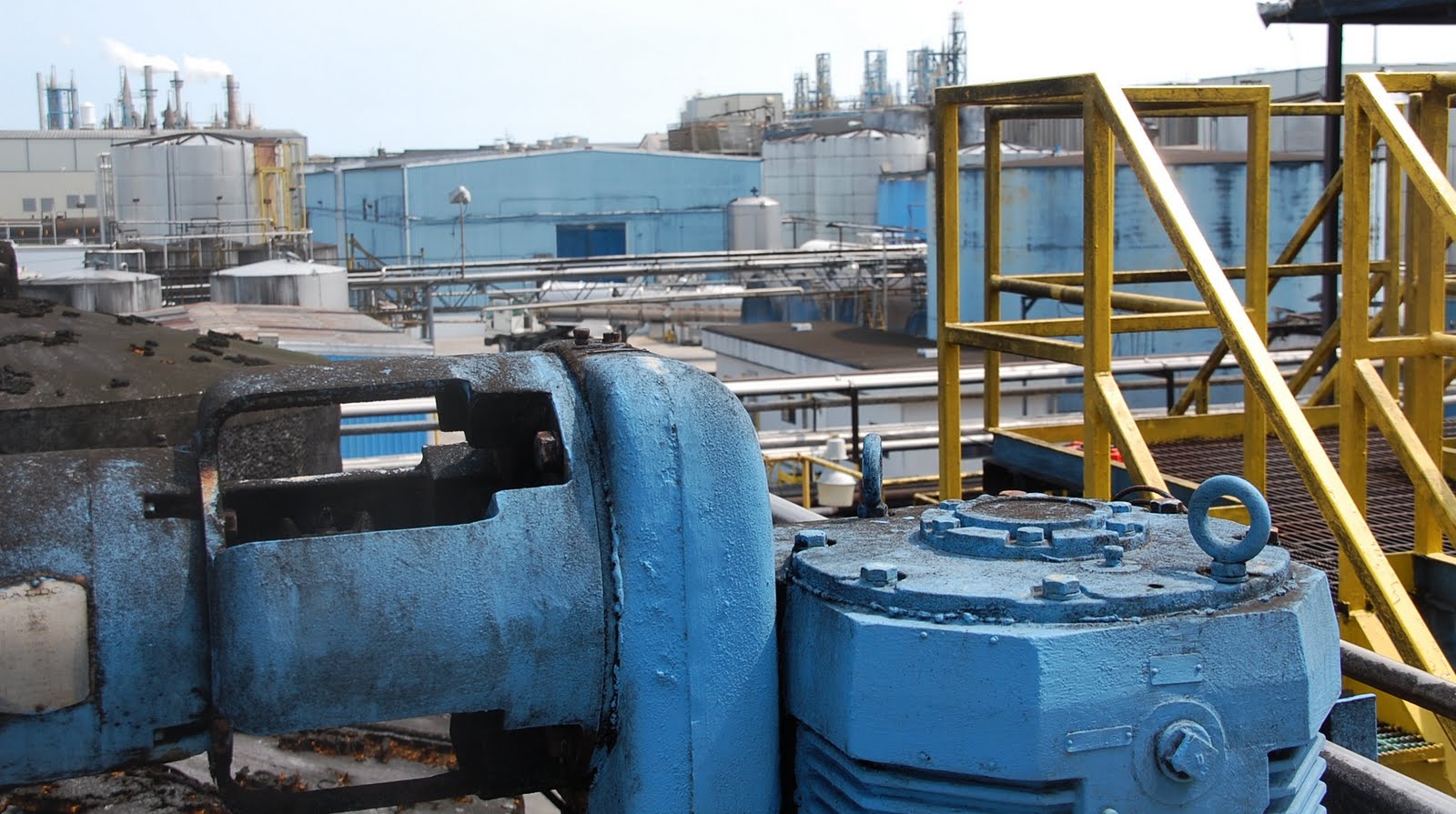
From the top of the fermentation tank you can see the size of the plant
     The Florida Caribbean Distillery,Winery, and Brewery is one of the most complicated operations of it's kind in the world.     These people do it all, distill, bottle, blend, flavor, brew beer, and make wine.     That is just touching the surface of what this operation can do.    If you want them to make you a "bottle, a bucket, a barrel, or a tanker truck load", they will be glad to work with you.    
      They have been responsible for the bottling of many very popular brands of rums for many years, as well as the flavoring of the rums they produce in the Caribbean.     They produce their own spirits as well that they distribute through their "Ron Carlos Brands" of rums and other varieties of liquors a well.     They are also a huge producer of wine based liquors to fill the needs of the "beer and wine" licensed bars and stores.     They produce the "Ice" beverages and "Mike's Hard Lemonade" for a multitude of brands.     This is one of those company's that have arms that reach into the spirit business wide and far.   

     Down to the nuts and bolts of the rum, you know the spirit that we all have a little bit of interest in.     They receive the bulk of the molasses from South and Central Florida sugar refiners, you can see this arrive by the tanker load all day long.     This molasses is processed through and combined with the proper yeast for the product that is being produced and the computer system that controls the entire process takes over and monitors and controls the rest of the process right down to the cleaning of the fermentation tank after the mash is sent to the distilling section of the operation.
     The computer system through all of it's sensors, servos, and operator really in the brains and the brawn of the fermentation, distillation, and the storage of the spirits.    Once the mash is fermented it is sent through a system of stainless steel pipes and pumps to storage tanks and then on to the still for the separation of the alcohol form the dregs.     The computer also controls the still and it's entire operation, from temperature control to the flow out of the still down to the storage units.    This is a good point to talk about the vast amount of waste materials that are left when the process of removing the alcohol is completed.     In the past we have seen operations that just pump the waste into the ocean and other places, but Florida Caribbean actually turns this into cattle feed and other useful products.    This is a very "Green" operation especially considering the enormous size and  volume of the waste materials.    Great to see an operation of this size so forward thinks to turn waste into profit.

     At this point the lab people take over sampling the batch and running analytical and sensory test on the batch to make sure that it matches the standards which they have to compare each run to.     When the standards of the lab have been met, they will send the batch to the bottling plant  where they are final filtered, flavored, bottled and packed for shipping.


Empty bottles headed to the filling machine
      The bottling operation is absolutely amazing, the can bottle 2 to 3 thousand plus bottles an hour when in full operation, that is a bunch of booze!    This nearly automated operation is a wonder to watch in operation.     The bottles go whizzing by you as you stand there and the fill just as quickly.     The bottles are whisked to the capping machine and then off to the labeler and into the batching area where they are boxed, palleted and sent to the warehouse for shipping.

Caps on headed for the labeling machine


Bottles being filled with a favorite rum


     This plant is a wonder of automation that is interlaced with good people that fill the gaps between what the computers can control and what people can do a better job of.    This a perfect marriage that leads to huge production numbers as good quality products.    The "green operation" in a highly efficient plant is something that really makes this one of the outstanding operations that I have had the opportunity to visit.     
     By the way there is a new Spiced Rum coming from  Auburndale.     "Black Robert" is a well balanced and fine tasting rum that has a great potential in the cocktail market and I'm looking forward ti it's introduction in the very near future.     I also have to thank the people of the Florida Caribbean Distillery for their hospitality and taking the time to show us around the plant.     ;o)

Thursday, June 9, 2011

Today We Look at Drum Circle Distillery

     Drum Circle Distillery is the small artisan distillery we visited on Monday.     This is a very unique operation run by Troy and Tom who are responsible for putting out some extraordinary rums.     The amazing part is that in a very short period of time this little distillery has won "Best in Class" at the Miami Rum Renaissance Festival for it's Siesta Key Silver Rum.      Now they have introduced a very nice gold rum and just about ready to release their new spiced rum.    By the way we did get the opportunity to taste the spiced rum at the distillery along with some of the newer rums right out of the aging barrels, very interesting experience, if you get the chance you need to try it.     "Barrel proofs" as they are called are at the 140 to 160 proof level at which rum is generally aged, giving you all of the taste as well as the "kick" of an overproof spirit.


Note the pipe leading to the Column Still from the pot still

     The real difference  with the artisan style of rum making is that there is a personal touch to each and every bottle of rum that leaves the distillery.     Tom and Troy are there to monitor the fermenting of the molasses, the distilling of the spirits, right down to the hand bottling and labeling of each bottle from start to finish.     Their Still is also very unique in that it is a pot still and a column still combined.     The process begins in the pot still and then the output is piped over to the column still to finish the process.       They also can produce just pot stilled spirit by bypassing the column still.      Once the spirit distillation is completed, it is either placed in barrels (the gold rum) until aging of the rum is complete or it is taken to he blending area where purified, finished by osmosis water is added to bring the rum down to it's 80 proof level.     Then the rum is ready to be bottled.


     The bottling process is done with a 4 bottle hand unit that they spend  the day operating to fill and then hand label each of the bottles before placing them in cases and palatalizing them for shipment.     This is a process that takes a couple of days to bottle and label a batch of rum.   


New Spiced Rum Label

     All and all this is a very labor intensive process that is done with a lot of dedication and passion.     The pride in the quality of their product is evident at every level of the process.     Their excitement as they pour a sample for us to taste and watching their eyes light up as we give an approving nod after tasting the rums.     All of us were impressed with the the passion with which they pursue the excellence of their rums.     By the way the new spiced rum is a very exciting product as well, the spice is done differently that most and the results do show.    You can start to watch at your favorite bars and liquor stores for this new Siesta Key Spiced Rum in the near future.     For those of you in the Key West area you will be able to try some just as soon as it is released or who knows maybe sooner at the Rum Bar on Duval Street.   


Sample of rum right off the still
      Well done guys and I wish you all the best and we really want to see this brand take-off and fly.     ;o)


Nothing like spirits right off the still
     

Wednesday, June 8, 2011

Rum from Florida.?


Boarding the Cape Air plane
     Yes there is an incredible amount of rum being produced in Central Florida.     Our two day trip through the Drum Circle and the Florida Caribbean Distilleries was an eye opener for all of us Rum XP's.


Drum Circle Distillery

Troy & Tom with their Still
      Mike Streeter and I boarded the "Captain Tony" Cape Air plane for Fort Myers early on Monday morning and it was off on our little adventure.     After arriving in Sarasota and getting settled into my friend's boat (our crash pad for the night), we were off the the Drum Circle Distillery.      Drum Circle is one of the fast growing and very popular small artisan distilleries  that have popped up around the industry.     These are the "mom & pop" small plants with very talented distillers and blenders that seem to be able to create very high quality rums and spirits.     Drum Circle is no exception, and they have the awards to prove it, winners of the "Best in Class" at the Miami Rum Renaissance Festival in 2011.    They are continuing to develop new and very fine rums from this fine little facility. 


Some of the brands made or bottled here

     On Tuesday morning we arrived at the Florida Caribbean Distillery and a HUGE eye opening experience and in full contrast to the small plant that we visited on Monday.     This is a full on liquor, wine, and beer facility.     The distill spirits by the ocean load, not to mention the bottling and other creative things they are doing at the "Most complex spirit operation anywhere".    Instead of seeing the entire operation in three small rooms we traveled around several acres of equipment to see where spirits come out of the still like a "fire hose" instead of a slow trickle.     The fermentation and the distillation are all handled by a computerized system that keeps everything consist ant and virtually non-stop.     The fermentation is done in batches, but the stills are run 24-7, keeping the flow of the spirits flowing from the plant non-stop.   


Part of the fermentation process

     This plant is also very "green" in it's operation, the leftovers from fermentation are turned into cattle feed and they make wine from the rinds and pulp from a local orange juice concentrator, among the many interesting things they do to make use of all of the waste from the process.    I commend them for this policy, not only is it a profit center when done properly, but it helps keep the landfills, streams, and especially in this area, the everglades clean from the industrial waste. 


The laboratory


     Next we are taken to the laboratory that tells how well and consistent the products and through many electronic and tasting methods to ensure the consistency of the products they are producing.    As we are moved into the lab and bottling areas we are required to dawn hairnets and safety glasses for our and the product's protection.     In stark contrast to the filling of four bottles at a time at Drum Circle, this plant can fill nearly a thousand  an hour under the proper conditions. 


Bottles being filled

      The two plants are in stark contrast to each other, but both provide services that make the industry and the rum so interesting, not only to drink, but to admire the unique ways that it is produced.     I'll bee focusing a bit closer of both of these facilities in the next few days and the differences in the ways that they produce the products, but a little bit if the differences in where they are heading  with the products and production of them.     Oh, we did get to have dinner at Trader Vic's in Sarasota as well.     ;o)