Tuesday, December 12, 2017

Koloa Introduces a New Coffee Expression

     This new expression is Distilled, blended and bottled by Koloa Rum Company Kalaheo, Kauai, Hawaii.  The new Koloa Coffee Rum is made from the mash of raw Cane Sugar, distilled in an impressive vintage 1210 gallon steam powered copper pot still and cut to proof with filtered water from the ancient Mount Waialeale.  The Spirit itself is a collaboration between the Kauai Coffee Company and Koloa Rum Company.

     The Koloa Coffee Rum offers a deep brown opaque hue highlighted by a light mahogany rim of highlights.  Swirling this rum in the glass reveals a small amount of real coffee particulate gathering in the amber legs moving slowly down the sides of the glass.  The aroma of freshly brewed Aribica and Robusto Bean coffee.  There are notes of molasses and rich dark chocolate to lead you into this exciting expression.  This intensely rich coffee flavored rum exudes an amazingly complex flavor profile, initially there are highly robust espresso coffee notes that are balanced with sweetness to carry you to your favorite coffee shop.  Initially it presents itself as an espresso cocktail and then it takes you home with a dry finish of light vanilla with hints of chocolate and coffee flavor.  Additional sips of Koloa’s Coffee Rum exhibits hints of tropical fruit and a long finish highlighted by hazelnut and stone fruits. 


     Koloa Coffee Rum is presented at an impressive 34% ABV or 68 proof, following the rum being distilled two times.   This is a nice product with a good natural flavor that will keep you coming back again and again.

Monday, December 11, 2017

Will This Battle Ever End?

     Pernod Ricard has accused Bacardi of making “misleading statements” with the introduction of its new “Forever Cuban” campaign for Puerto Rico-made Havana Club rum.  These two competitors have been this what seems to be a forever lasting trademark battle over the Havana Club brand.  Bacardi produces a expression of Havana Club rum, created in Puerto Rico to be sold in the US, while Pernod Ricard owns the international rights to the Cuba produced Havana Club brand that is sold to the rest of the world.  The United States has still got a ban on Cuban products being brought to the United States and this is the real Issue, because Bacardi owns the trademark for the United States.
     February 2016, the US Patent and Trademark Office did overturn a Supreme Court decision and gave Pernod Ricard the trademark for the next 10 years.  This is what set off the latest rounds of the battle and what looks to be another lengthy legal challenge for Bacardi.   
    Tensions have come to the surface once again with the launch of Bacardi’s “Forever Cuban” campaign.   Experiences of Cuban exiles at the center of the campaign along with the use of Cuban-American actor Raúl Esparza are all causing the rift to become larger.  
     Havana Club International is holding firm when it comes to the authenticity of its rum portfolio, including white, dark aged and premium rums, all exclusively produced in Cuba.   Pernod Ricard and Havana Club International make it clear that “Havana Club rums are distributed globally except in the USA, due to the ongoing trade embargo.   “The Cuban Havana Club rum, produced through a joint venture between Cuba Ron S.A. and Pernod Ricard and crafted in Cuba, from local sugarcane to the glass, with the knowledge and expertise of Cubans that has been passed down from generation to generation of Maestros del Ron Cubano. 
     Bacardi has issued a statement in response to Pernod Ricard 's Statement about  Bacardi's accuracy.
“In 1959, the Castro regime seized the assets and confiscated the distillery of the Arechabala family, the original owners of Havana Club rum,” the spokesperson continued. “But, they could not steal the Arechabala’s recipe or strip the family of their soul, which is rooted in the craftsmanship of their product and solidifies their continued family legacy.
“After the Cuban regime unrightfully and forcefully confiscated the brand from the Arechabalas, Ramon Arechabala personally transcribed the recipe and gave it to Bacardi as an agreement between the two families – both of whom were exiled from their homeland.
“The ultimate convergence of two Cuban families coming together to continue an iconic brand’s legendary heritage with an authentic product, Bacardi is committed to continuing this legacy.

“It does not matter where Havana Club rum is produced, which in our case is Puerto Rico. Its Cuban authenticity is based on the original recipe, great-taste, craftsmanship, technique and passion since the brand was crafted in 1934.”

Sunday, December 10, 2017

I Guess I'll Take the Thunderstorm Over the Snow

     I hate it when you guys up north start getting snow, because when that cold front comes through down here in the Keys, it translates to a day of ominous clouds and temperatures down in the Sixties. This is not what the tropical life is suppose to be all about.  Mid Seventies are wonderful, but without heat in the house or in my case on the boat, it is time for fleeces and other warm things and for the most part staying inside out of those "raw" winds.  Enjoy your snow, but in a couple of days we will be back in the mid Seventies again and we all will be smiling again.


Saturday, December 9, 2017

It Could Cost You $10,000 to Fly a Drone While Under the Influence Over New Jersey

     Lawmakers in New Jersey have proposed a bill that would make it illegal to operate a done while under the influence of alcohol in a bid to reduce irresponsible use of the remote-controlled devices.  If passed, the bill would prohibit the use of drones under the influence of drugs or alcohol, or using a drone to harm wildlife or endanger people or property Just think, it can be just as expensive to sit on your patio having a few beers and be arrested for flying your drone.  WOW, or toys are finding more and more ways to get us thrown in jail.
      The bill would also make it a fourth-degree crime for drone operators to interfere with emergency services, or endanger the security of a correctional facility. The bill, which passed out of a New Jersey assembly committee on Monday, will go before the full senate on Thursday.   Such crimes would be punishable by up to 18 months in prison and a $10,000 fine.  
      “This bill sets specific guidelines for how New Jersey’s residents will be allowed use these devices and to establish some order, to prevent many of these dangerous situations.”     Consumer drone sales in the US has increased exponentially over the past few years, and not expected to slow down in the near future.  The Consumer Technology Association projects drone sales will pass the $1 billion mark by the end of 2017.   Most of drones sold weigh less than 0.55 pounds, the limit before registration is required with the Federal Aviation Administration.

Friday, December 8, 2017

Spirits Proof Down with Water Drawn From the Clouds

Cloud Water Generator
     Hilton Head Distillery in Hilton Head, South Carolina is using a unique water supply for its rum and vodka making.  They are condensing the water from the very humid air around the distillery and then using it to proof their spirits down to bottling proofs.   Their Aermoor Vodka is handcrafted from fresh molasses, it is then distilled 49 times before being proofed down with water sourced directly from the clouds above Hilton Head Island.
     Distillery owner Joe Fenten said, water that is used in the making of our spirits is a product of Hilton Head’s radiant environment and we’ve used the finest water source there is, water sourced directly from the atmosphere.   The result is crisp and delicious vodka and rum that will appeal to most everyone.”
     The process created by Fenten, uses an atmospheric water generator.   This is one of the most unique ways to make the pure water needed to proof down spirits anywhere and offers a very special cleanness to all of their products.

Thursday, December 7, 2017

Avoid the Holiday Legal Hangovers of This Years Parties

     This is my annual plea for everyone going to or having a holiday party this year to be aware of the potential for serious liability.   'Tis the season for holiday parties, but there are risks to hosting these parties.  Parties can boost friend’s morale, however, there are inherent risks that accompany hosting this type of party, particularly during the holidays and when inhibitions are lowered with alcohol and a festive atmosphere. Here are some tips to avoid legal "hangovers" from hosting holiday parties and mitigate the risks to you and your friends.

1. Lessen the Risk of Inappropriate Liaisons

     Consider allowing guests to bring a spouse or other guest, or perhaps make the party a family event. Although expanding the guest list increases costs, it also may result in guests behaving more appropriately with your other guests. Generally, people are less likely to engage in offensive behavior when they are accompanied by their significant other/

2. Ensure Safe Transportation and/or Lodging Options

     The host should encourage responsible drinking, use of designated drivers and public transportation options.  The possible of a place for guests to stay if they have had too much party to get home safely. 

3. Serve Alcohol Responsibly

     One of the simplest ways to mitigate risk is to avoid serving alcohol at all, but alcohol should be served only by professionals who will check IDs and respond appropriately to guests who may be consuming excessive amounts of alcohol or drugs. 

4. Set a Hard-Stop End Time

     The event should have a definitive start and end time. This also provides an opportunity to reiterate the message to travel home safely and lay out alternative methods of transportation/lodging rather than driving under the influence.

     While following these tips cannot guarantee an issue-free event, it certainly can reduce the risk of having troubles that come back to haunt you afterwards.   With careful planning and oversight, it is possible to have a great and fully appropriate office party.

     Here is to all of you having really fun holidays, and the fun staying inside and off of the streets where your parties can be ruined in a heartbeat and leave you with some awful legal hangovers.   Have a great time and be safe.  Cheers!


Wednesday, December 6, 2017

Confusing Shipping Restrictions Fall on the Retailer’s Heads

     People forget just how different alcoholic beverage sales is from the bulk of consumer products. Alcohol, beyond the fundamentals of age restriction and tax collection, the public is barely aware of how deeply and disparately alcoholic beverages are regulated.  There isn’t anywhere that this is more evident than with shipping.   Americans can order clothes, send gifts, and by just about anything on the internet, parcels are dispatched with minimal ado and delivered to your place.   Those of you that are used to instant gratification, purchasing of alcohol on line is the very frustrating exception.   Sending a bottle of local gin home from vacation or ordering vintage Champagne for an anniversary can be complicated if not impossible.  Unfortunately, this usually happens at the retail outlet, leaving the merchant responsible for explaining why this problem exists.

     Here are the legalities of getting alcohol from one place to another, to help retailers get the options across to their customers.   Carrying alcoholic beverages on a plane with you is doable, but you must follow the TSA rules.  Airline passengers are familiar with the 3.4-ounce TSA rule for all carry-on liquids including alcoholic beverages, full-size bottles need to be in checked luggage, but there are some restrictions to that as well.   As far as your carry-on luggage, you can place all of the 3.4 oz. bottles of alcohol you can fit in a one 1-quart plastic bag.  In your Checked luggage, anything under 24%  or 48 proof, alcohol is unlimited, anything 24% to 70% or 48 to 140 proof alcohol is limited to 5 liters per passenger.  Any alcoholic beverages over 70% ABV or 140 proof is absolutely prohibited.  All bottles must be unopened.   Duty-free is the exception to these limits.  You should be aware that TSA and customs are totally separate entities, passengers should check customs limits set by the country they're entering, or be prepared to pay duties on their purchases.  Many times this amounts to a dollar or so per bottle, but if you are bringing in a very special spirit that can’t be obtained at home, this is a small price to pay.

     On an interstate train, there are no restrictions on carrying unopened containers of alcohol.  Control states have laws that forbid the transport of alcohol across state lines in your car.  For instance, there is a discount liquor store just across the state line between North and South Carolina that the North Carolina Police will take the license plate numbers of customers and the police will watch for the cars to cross into North Carolina and bust them for “bootlegging”.  This is an example of the ends that some states will do to protect their revenue, but most of these laws are primarily to discourage purchasing large quantities of alcohol in a neighboring state where taxes are lower.    If you are planning to drive across state lines with a "personal quantity" of alcoholic beverages should use common sense, making sure the bottles should be unopened and in the trunk.

     How many times has a customer carefully picked out the perfect gift bottle, then asked if it could be mailed?    The real question here is "where is it going".   It is not legal for consumers to mail alcohol themselves to a U.S. destination, via any method.   The United States Postal Service and the common carriers like UPS, FedEx etc. will refuse to take any such parcel known to contain alcohol.    If the destination is outside the country, shipping is legal, but you should check with customs of the destination for their regulations.  Retail shipping is a real nightmare.   While most states allow licensed state retailers to ship to other state customers within the same state, most do not allow any interstate retailers to ship in.   The regular carriers like FedEx and UPS have recently stepped up enforcement of retailer shipping laws, and ship only to the states that allow it.

      If craft makes of beer, wine or spirits hope to compete with world-wide operations like Amazon, they will need to start to push for the change of rules in more states to allow legal retailer to consumer shipping of alcoholic beverages.  This is very clearly the only that the “shipping lanes” can be opened up in the future.

Tuesday, December 5, 2017

Happy Repeal Day 2017

     The thirteen years of Prohibition here in the United States was a dark time.  The criminalizing of alcohol led not only to a rise in civil disobedience and organized crime, but also to the loss of customs associated with the production, preparation, and consumption of alcohol.   We celebrate Repeal Day because December 5th marks a return to the rich traditions of craft fermentation and distillation.  The resumption of the legitimacy for the American bartender as a contributor to the enjoyment of the clientele, and the leader of responsible enjoyment of alcohol as a widely enjoyed social custom.

     This day is conveniently located halfway between Thanksgiving and Christmas, at a time when most Americans are probably not spending time with family.   Repeal Day presents a wonderful occasion to get together with friends and pay tribute to our constitutional rights.  Unlike St. Patrick's Day or Cinco de Mayo, Repeal Day is a day that all Americans have a right to observe, is only possible because it is written in our Constitution   There is no other American holiday celebrates our laws guaranteeing our rights.
 

     This day is the 84th anniversary of Repeal Day.  I just hope that you take a little time to at least acknowledge the importance of this day for Americans.  It is a day of choice and a day that makes sure that we do have that choice here and don’t have to be criminals to enjoy an alcoholic beverage.  Cheers!!

Monday, December 4, 2017

What are the Plates in a Still All About?

Multi Plate Column
     Plates or trays as they are sometimes called, are used in distillation to enhance the mixing of liquid and vapor in the column of the still, whether it is a pot still with a column or a column still.    While their function is the same in both batch, post stills and continuous distillation, column stills, but their actual function is very different.
     Richard Seale, one of the most knowledgeable distillers anywhere has taken some time to explain  what they really do and how.   Basic batch distillation does not employ plates, but it is important to understand that the lyne arm is a basic type of plate. The cooling of the atmosphere causes liquid, known as reflux to form on the sides of the lyne arm and that mixes with the rising vapor.   The lyne arm then becomes the most vital part of the batch still and its shape affects its function as a plate and directly affects the performance of a still.
Lyne Arm at Top of Pot Still
     In batch (pot) distillation the wine is distilled till all the alcoholic spirit is removed in as the name implies, a batch process. Our lyne arm, affects the level of reflux) which in turn affects two fundamental things: the timing of the arrival of the various components of the wine and the contact time with copper.   The nature of our rum will be decided by the cuts. But affecting the timing of the components will affect quality of the cuts. Basically, having a good lyne arm developing good reflux will help ensure all of the undesirable heads arrive early and all of the undesirable tails arrive late so we can make our ideal cuts. Poor reflux means poor separation by timing yields poor quality hearts.   Low contact time with copper also leads to poor quality hearts.

Double Retort Pot Still
     When we add plates to a pot still stem, we are basically “supercharging” our lyne arm. If we add a condenser we are adding even more to our lyne arm.   We are using additional cooling over and above what the atmosphere gives and this together with the additional surface of the plates will improve the reflux.   It is the equivalent of using a giant lyne arm.   The plates in the pot still don't remove any congeners. They don't "purify" anything. They don't make a "lighter rum". The plates just affect the timing and contact time. Our cuts determine the congener profile but the plates by controlling the timing give us far greater control over what we “select” with our cuts.   Copper is thought to play a role in ester formation so enhanced time will increase congeners. The cuts, the copper contact and fermentation, determine how "heavy" we make the rum. Not the plates.        Our double retort still at Foursquare has plates above the pot and a cooling condenser.  The retorts also function as a kind of plate.  Many Caribbean pot stills were modified in the 19th century to add plates.
Large Column Still 
     Now in continuous distillation plates likewise enhance liquid/vapor contact. The same way you have batch distillation without plates, you could in theory build a continuous column system without plates. But it would be impractically tall. The enhanced liquid/vapor contact with external condenser cooling, makes the continuous column system practical. And with enough plates and reflux we can separate pure ethanol, but we are talking over 75 plates in the last column alone from the other congeners. In a steady state continuous column still the plates enhance the physical separation in the column and we draw off heads and tails from physical points where these congeners are concentrated.  We also draw ethanol or light spirit, from the physical point where the ethanol is positioned in the column.   The net effect of plates is to assist in “purification” or making lighter spirits or indeed making pure alcohol.

     Plates have very different roles depending on whether it is continuous or batch distillation. The function is the same, the role is different.  While on the topic, there are no hybrid stills. Still are either batch or continuous. With or without plates.  I hope that Richard’s explanation has helped understand the function and the use of plates in the process of distillation.

Sunday, December 3, 2017

Old Havana, The Parque Hotel

     From my window at the Telegrafo Hotel on the square in Old Havana you have a beautiful view of the Parque Hotel and the skyline of Old Havana.   This is a place that time has left alone, and a wonderful place to get lost in the past and all of its glamour and the excitement of the days before 1960.  This is a city that enjoys the fun of today and the intrinsic beauty of yesterday.


Saturday, December 2, 2017

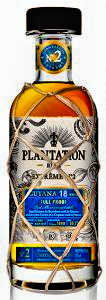
Plantation Has Released their Extreme No 2 Rum Series

     The latest expressions being from Maison Ferrand and rum master blender Alexandre Gabriel have been released, two limited edition aged rums have joined the Plantation portfolio as a part of their very successful Extrême Rum collection.   Plantation Fiji 2001 Extrême N°2 and Plantation Guyana 1999 Extrême N°2 are the latest expressions in the Extreme Series.  The 2016 Extrême No. 1 Group that include the release of Plantation St. Lucia 2005 Extrême N°1, Trinidad 2002 Extrême N°1 and Plantation Barbados 2005 Extrême N°1. Now we have the first two expressions of the Extrême No. 2 group.

     Plantation Guyana 1999 Extrême N°2, is from the now-closed Uitvlugt Distillery, in the Port Mourant pot still back in March of 1999.  The rum was aged in Guyana for 15 years in bourbon casks.  Then it was sent to France to be rested for three more years in cognac casks. This rum has a nose boasting aromas of exotic fruits, herbs and spices.  On the palate, woody, spicy and nutty, followed by fresh fruit flavors. The rum packs a punch as it has been bottled at 59.7% abv.

     Plantation Fiji 2001 Extrême N°2 bottled at 61.1% abv, is from South Pacific distillery, first distilled in pot stills in March 2001. From there, it then spent thirteen and a half years in Fiji lying in bourbon casks, before being transported to France for 2.5 more years of ageing in cognac casks.   The rum at this strength has intense aromas, with initial notes of alcohol and wood, leading to a meaty profile, with cooked fruits. On the palate, it is rich, reminiscent of a peaty malt whisky with a vanilla fudge, hazelnut, cocoa and all the woody and smoky notes as well.

     You’ll need to move quickly if these are of interest you, both are some of the rarest made by Alexandre Gabriel, with only 1,000 bottles of Guyana and 500 bottles of Fiji currently available…

Friday, December 1, 2017

Bahama Bob's Winter Daiquiri

     This is a fun Daiquiri that is made with Blonde and Dark Pilar Rum, a Cinnamon Syrup, Lime Juice, Grapefruit Juice and a splash of Campari.    This is for the Daiquiri lover that just wants a little be different flavor for their wintertime daiquiri.

Bahama Bob's Pilar Winter Daiquiri


  • 1 1/2 oz. Pilar Blonde Rum
  • 1 1/2 oz. Pilar Dark Rum
  • 1/4 oz. Campari
  • 1/2 oz. Grapefruit Juice
  • Juice of 1/2 Lime
  • 1/2 oz. Bahama Bob's Cinnamon Syrup


Place all ingredients into a shaker filled with ice and shake until really chilled and strain into a Martini Glass and garnish with a cinnamon stick.


Bahama Bob's Cinnamon Syrup


  •  2/3 Cup Sugar in the Raw
  • 1 Tbsp Ground Cinnamon
  • 1 Cup Water


Put sugar and the cinnamon in in a pan and heat until you begin to smell the cinnamon aromas rising.  Add the cup of water and stir while you bring the mix to a boil.  Reduce heat to maintain a slow boil and keep stirring for about 5 minutes.  pour into a suitable container and allow to cool to room temperature before using.

Thursday, November 30, 2017

Say Good By to the 2017 Atlantic Hurricane Season

The Map of the Tropical Activity for 2017 Says it All
     Today officially marks the end of the Atlantic Hurricane Season for 2017.  This has been a devastating hurricane season in the Caribbean, Atlantic and the Gulf of Mexico.  There were three extremely powerful hurricanes, Harvey, Irma and Marie that were responsible for the majority of the record setting damage.


     The 2017 Atlantic hurricane season has been a hyperactive and extremely destructive one, featuring 17 named storms, tying with the 1936 as the fifth-most active season since records began in 1851, and the most since 2012.    The season also features both the highest total accumulated cyclone energy and
the highest number of major hurricanes since the 2005. Ironically, I arrived here in Key West right behind Hurricane Wilma in October of 2005.    2017’s hurricane season was by far the costliest season on record, with a preliminary total of over $367.56 billion in damages, which is more than double the second costliest hurricane season’s damage. The tough part is that nearly all of the costs was due to three of the season's major hurricanes, Harvey, Irma and Marie.  This season is also one of only six years on record to feature multiple Category 5 hurricanes. Irma's landfalls on multiple Caribbean islands and Maria's landfall on Dominica made 2017 the second season on record other than 2007 to feature two hurricanes making landfall at Category 5 intensity.  In addition, Irma was the strongest hurricane ever recorded to form in the Atlantic Ocean outside of the Gulf of Mexico and Caribbean Sea.  

     Lets just hope that the 2018 season doesn't come close to this one.  Good by and good riddens  to this year's hurricane season.

Wednesday, November 29, 2017

The Vanilla Shortage Looks to be Having an Effect on the Spirits Industry

Vanilla Orchid
     Surging vanilla prices are forcing many spirits producers to get creative or eat the costs.  It seems that an unprecedented global shortage of vanilla is prompting spirits producers to make changes, whether that entails pulling certain vanilla-rich products from the market, adjusting processing techniques, or simply taking a hit until prices return to normal-if they ever do.   Vanilla prices have been on the rise for years, initially because of increasing consumer demand for "natural" vanilla. 

     Vanilla is derived from the pods of an orchid, with demand outstripping production and prices rising accordingly.   A cyclone hit Madagascar back in March, an island that produces about 80 percent of the world's vanilla, reducing the supply even further.  About one-third of the vanilla crop there was destroyed.   Today the price of vanilla beans is now 10 times what it was just five years ago. From a low of around $50 a kilogram in 2013, the price rose in 2015 and 2016 to $100 to $200 per kilogram as the demand for natural vanilla increased. The price skyrocketed after the cyclone, to around $500 per kilogram. 

Vanilla Beans and the Orchid Flower
     It takes about three years from the time an orchid vine is planted until the vanilla beans can be harvested and a new supply will be hard to come by for the short haul.  This means higher prices for some time.   There are three viable options for flavored spirits makers at this time.  One is to absorb the cost, pull the vanilla flavored spirits off the shelves, buying vanilla from other parts of the world, like Tahiti, Indonesia and Madagascar or using less vanilla in the blend.

      Most of the spirits producers are reluctant to pass on these costs to the consumers because of the highly competitive nature of the business.  However, there needs to be changes made if they are to stay profitable.   
There are some producers that seem to able to survive the vanilla shortage better than others.  Particularly larger producers, that have larger stocks of vanilla will most likely be unaffected by the current vanilla shortage.

     For the most part, spirit producers are trying to keep things going on an even keel and hope that this shortage like so many other shortages in history will eventually normalize and the prices will sink back down as they did when we had the lime shortage a few years ago. 

Tuesday, November 28, 2017

What Heats the Modern Still and How Dangerous Can it Be?

River Antoine Wood Fire Heated Still from 200 Years Ago
     Over the years there have been various methods for heating the stills that make your favorite spirits.  Most modern spirit stills are heated by steam.  This is a good method to get the needed heat with out the danger of an alcohol vapor explosion like often happened in the earlier days of the stills.

"Coffin Still" Kentucky Hills Shiner's Method
     Going back about 200 years or so they would often set a wood fire under the pot stills and get a good layer of coals burning hot enough to vaporize the alcohol from the wash and condense the alcohol.  This is a good source of heat, but open flames and alcohol vapors don't mix.  The real problem with alcohol fires is you can't see the flames and you will be seriously burned before you have any idea there is a fire.

      Many a moonshiner has blown himself up when the vapors of alcohol escaped from their still and got to their heat source and ignited.  The real problem is that many of the stills, both legal and illegal don't have a way to make steam safely and rely on propane or wood fires to heat their still.  I've seen people use a kitchen gas stove as a heat source.  If it gets too hot, then there is a risk of the alcohol vapor being ignited and at minimum a fire or maybe an explosion.

Stove Top Still with an Open Flame
       Besides the legal issues involved, there are also health concerns to worry about. Moonshine can become tainted with toxic liquids, especially methanol, the form of alcohol reputed to cause blindness and death. 

     All I can say is before you start to play with distilling find out what you are doing and realize that it is illegal for a reason, not just for tax and health reasons, but for your well being and personal safety.

Monday, November 27, 2017

Puerto Plata to Host First Dominican Rum Festival

     The Dominican Republic has long been one of the centers of Caribbean rum making, and now it will soon have a festival worthy of that heritage.  The “Dominican Rum Festival” is coming to Puerto Plata, which will play host to a festival aimed at exclusively promoting the products of Dominican rum houses.
     The inaugural 2018 edition will be held from July 5-7.   The event will take place in the Urban Park of Puntilla del Malecon in Puerto Plata, according to Roberto Casoni and Jakaira Cid, president and executive director of the Tourism Cluster of Puerto Plata, respectively.  The aim is to help demonstrate the “cultural identity of each of the participating brands,” according to Casoni.

     The aim is to hold the Dominican Rum Festival annually.  “The Dominican Rum Festival will be an exhibition of rums framed in a magical environment where our producers will exhibit the best products of the national industry to lovers and professionals of rum from around the world.”  Attendees will be able to enjoy different activities like concerts, seminars, talks, workshops, tours, tastings, cocktails and tasting contests.  “We will also have international guests from different parts of the world, interested in the presentation of new products for commercialization”.

Sunday, November 26, 2017

Rum Origins are Blowing in the Wind

     Thinking back when rum was not what it is today, but rather something that was very rugged called Kill Devil.  This goes back to the days of Barbados and the island that was the king of sugar and a lot of molasses that was being dumped into the sea and other places.

     Today Barbados is an island that is steeped in history and the arguable home of rum.  This is a windmill that in its day was used to crush the sugarcane to make the sugar and yield the molasses to make the rum.


Saturday, November 25, 2017

A New Study Shows That Different Alcohols Evoke Different Responses for Different People

     I found this to be an interesting article.  I know that I get different feelings when I drink different types of alcohol.  I know that I really don’t want to be drinking Tequila, because it makes me a bit on the grumpy side, where rum makes me feel good and in a happy place.  I find it interesting how the respondents to this study reacted to the different types of alcoholic beverages.
     Many drinkers claim to feel teary after a Gin &Tonic, or unusually aggressive after a shot of whisky, but researchers now say they have found new evidence to suggest different types of alcohol elicit different emotional responses.  Drinkers say they feel confident, energized, aggressive and sexy after drinking spirits
     The study, took responses from almost 30,000 people aged 18-34 and compared their thoughts after drinking spirits, red wine, white wine and beer.  After looking at the drinking habits of people across 21 countries, the study found that different drinks affect our emotional responses in varying ways.  Its results showed that 58% of people who drink spirits said they felt energized, while just 7% of red wine drinkers reported feeling the same way, and 60% of them said they felt tired.
     One third of respondents to the study were female, with the researchers noting that women were more likely than men to report each emotion when drinking a single type of alcohol.  The study found that 42% of people said they felt sexy after drinking spirits, while just 25% of red wine, 24% of white wine and only 19% of beer drinkers felt the same way.   In spirits drinkers, more people said they felt restless, aggressive and energized after drinking spirits than any other type of alcohol. 


Friday, November 24, 2017

What Happens to the expired Rum, Vodka, Wine and Beer or Soft Drinks That Doesn’t Sell?

Parallel Product against the Rancho Cucamonga Skyline
      There is a place in Rancho Cucamonga, California that turns all of the wastes of the alcohol and soft drink industries into fuel for your automobile.   From a vineyard in Napa, a bottle of red can travel to a five-star restaurant in Manhattan, or a well-heeled dinner party in Tokyo.  But for some unlucky vintages, it's a drive of more than 400 miles south down the coast of California, to Parallel Products, where, in a facility surrounded by scrub brush, scrap heaps and festering waste ponds, a bottle of fermented grape juice can be dumped into modified stills and converted into fuel-grade ethanol.

Huge Stills that Turn Waste into Fuel
     Commercial distilleries have been churning out ethanol as far back as World War II, but ones that turn our waste alcohol into fuel are relatively new.  Those forlorn wines turn east at Los Angeles and head 140 miles more down the San Bernardino Freeway ending up in Rancho Cucamonga, on the outskirts of the suburban sprawl.   This is an area filled with scrub brush, scrap heaps, and festering waste ponds and the end of the line for the cast offs of the beer, spirits and wine industry.

     The Rancho Cucamonga area is filled with car-eating steel separators and monolithic humming electrical towers and fermentation tanks in a junkyard.  This is the very reason for the facility's existence, the last stop in a side of the Alcohol business world that nobody ever thinks much about.   This is the home of Parallel Products, a company that might not manage the trick of turning water into wine, but turns dead alcoholic beverages into fuel-grade ethanol on a large scale. 

     "We destroy some products here that the brands don't want people to know about."   This is a place that no alcoholic producer would ever admit knowing about, but it provides a service that is much needed by the industry.  It is one of two ethanol recovery facilities operated by 30-year-old Parallel Products and where it turns the West Coast's distillery waste and unsellable wine, beer and corn syrup-rich soft drinks into fuel.   


The main products destroyed at Parallel are either waste from the distilling process known as "heads" and "tails" of each batch, this is the part you throw away unless you want to go blind, or "distressed surplus" beverages. According to its website "Each year, Parallel Products receives and recycles over 13 million cases and 3 million bulk liquid gallons of unsaleable beverage products."  Parallel, a place that processes skunked beer, tainted liquors and flat colas into gasoline additives, becomes an attractive option for a perfectly palatable Pinot.  Now you know what happens to a lot of the waste from the production of alcoholic beverages along with the high sugar content products that just didn’t make it into the “glamorous” world of the beverage industry.

Thursday, November 23, 2017

Happy Thanksgiving Everyone

     This is just a short and sweet edition today.  I just want to take the time tow wish everyone a very Happy Thanksgiving and hope that you will make the time to get together with those most important in your life and give thanks for all that you have.

     Many of my friends have had a pretty rough time this year, but they have made giant steps toward recovery and we call be thankful that we are still alive and putting our lives back together.  I'm thankful for so many friends and being down here in the keys still.   I'm hoping that you can enjoy this very special day and share it with your friends and families.

As the Sun Rises, I realize All That I Have to be Thankful For.

Wednesday, November 22, 2017

Another Major Merger of American Alcoholic Beverage Distributors, Are We Headed toward a Monopoly?

      The mega distributor Southern Glazer looks like it is going to have some huge company with the proposed joining of Republic National Distributing and Breakthru Beverage Group.  The completion of this deal will mean that 56% of the American alcoholic beverage distribution will be controlled by two distributors.  Many of the larger producers and looking toward having only one distributor in the United States, a trend that is being spearheaded by Bacardi and Campari, but we will see where this leads.  We question whether there will be pressures on other suppliers to consolidate their distribution networks to one wholesaler or continue with a portfolio approach. A sole supplier could lead to better coordination on retail activation and branding, lower inventory (better readings for stock levels), cost savings (simpler organizational structure). On the other hand, a sole supplier could lead to improved bargaining power of wholesaler over supplier.


    "The merger of RNDC and Breakthru will create strategic opportunities that will benefit our associates and our business partners in a rapidly changing and highly competitive marketplace. Much more than a growth opportunity, we are entering this venture to create something that is different, sustainable and transformative," said RNDC President & CEO Tom Cole. "Together, our deep bench of focused, diverse associates will bring great and unique advantages to our suppliers, our customers and the consumers who enjoy the products we represent."  Proposed Merger to Allow Greater Focus on Innovation and Differentiation in Rapidly Changing and Competitive Marketplace

     Breakthru Beverage Group President & CEO Greg Baird commented, "Breakthru looks forward to joining forces with RNDC to establish an even stronger foundation of industry knowledge, talent, history and heritage. We see this as the launch pad to bring innovation to life and to usher in a new era for our business and industry."   
"Across North America, the combined company of RNDC and Breakthru will benefit from a broadly expanded footprint, a passionate and progressive team, and an uncompromising commitment to providing innovation, value and service to all our stakeholders," added Cole.   The transaction is expected to close late in the second calendar quarter of 2018 subject to regulatory approvals and other customary closing conditions.


Tuesday, November 21, 2017

Unique Aging and Finishing Processes

Oloroso Sherry Casks
     There are many ways that are known throughout the world for  finishing spirits.  They take in the factors of altitude, temperature, humidity, and even consistency of all of these.  For me, there are many of these that are very unique.   For instance there is one rum distillery in Thailand that places the rum casks in an open grid rick over a spring that gives off a cooling effect that keeps the aging bodega at a constant cool temperature.  There others that have their aging bodegas high in the mountains of Central America to get the aging dynamic that they are looking for.

     One of the most interesting that I have run across is in Grand Cayman where the Cayman Spirits Company places their casks down in the ocean at seven fathoms and leaves them there for two years .  This method keeps the casks in motion the whole time and a a very constant temperature and pressure.  I've als heard of companies that place their casks on ships and sen them on a year long journey that speeds the aging process because of the motion of the ocean and the ship cruises.

Seven Fathoms Special Edition and Seven Fathoms
     Cayman Spirits Company has taken their process one step farther, by putting the rum that has spent two years under the sea into a Oloroso Sherry cask for another year to put the final finish on the rum.

    These days there are many distilleries that are using different wine casks to put the final finish on their rums.  Richard Seale has used Zinfandel, Madeira, Oloroso Sherry and other casks for years to put the finishing touches on many of his fine rums.   Diplomatico and others have been doing the same thing for many years as well.
.  This adds a subtle finish to the rum that makes it really special.

     It seems that these days that the place you age your spirit is just as important and yield as big of an effect on the finished product as how you distill it and where you source your raw materials.