 |
| The Beautiful Gorda Sound in the British Virgin Islands |

This is a blog that will take you through the Rum lifestyles of a fine group of people that enjoy the fun and pleasure of fine rums. We will travel to distilleries, partys, and Rum Events to bring you the Rumstyles of all those we come in contact with.
Sunday, June 10, 2018
Cruising to the British Virgin Islands in My Mind
Thinking about out next destination off of the rock here in Key West and We've been thinking about going back to the Virgin Islands. Gorda Sound at the end of the Sir Francis Drake Channel is always a beautiful place and spawns memories that put smiles on my face. The British Virgin Islands and the U.S. Virgin Islands have so many wonderful spots to hang out.


Saturday, June 9, 2018
Where is Your Beach?

With summer fast approaching, I got
thinking about beaches and where I should be heading to find a great one to
spend some time on. Key West is not
known for its beaches, so it is to the south that my mind thinks about when I
think about a beach.

The first place that comes to mind is the
out islands of the Abacos in the Bahamas.
Places like Treasure Cay and Great Guana Cay come to mind. These are the eastern most cays of the Bahama
chain of islands and are right up against the Atlantic Ocean. The deep blue colors of the waters on the
eastern side of the cays and the “crystal bay” waters between them make for an
absolutely beautiful beach environment.

The Virgin Islands also have some really
wonderful beaches to share with you as well, places like Honeymoon Beach, White
Bay, Cane Garden Bay and so many more.
One of my favorites is to find a hammock on White Bay and relax in front
of the Soggy Dollar with a “Painkiller” and enjoy.
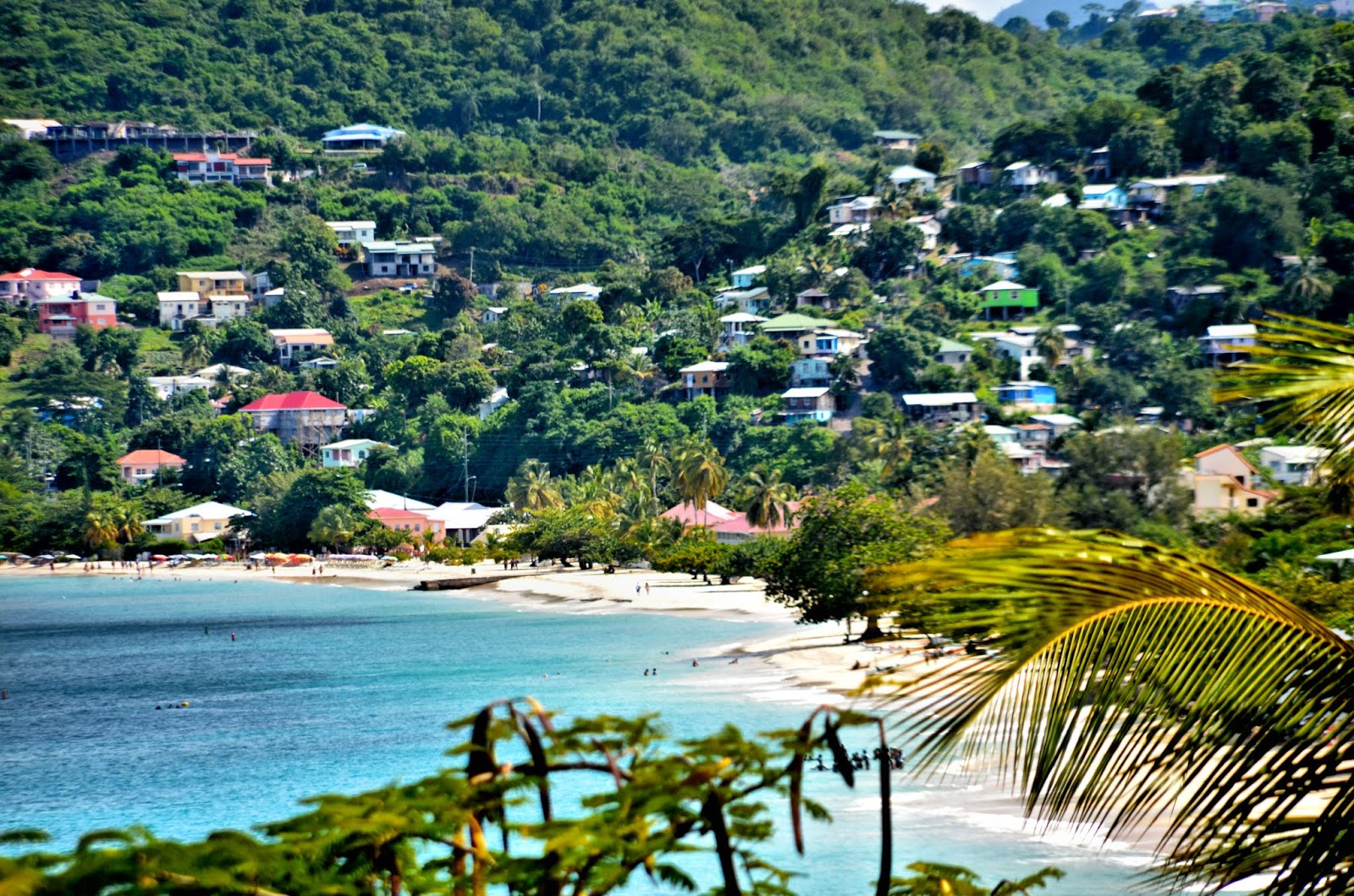
Grenada’s Grand Anse is another of the long
beautiful beaches that are really great to walk along, especially in the
afternoon. This is a beach that seems to
go on for miles and miles as you roam from beach bar to beach bar and enjoy
yourself.
 There are so many fabulous beaches
throughout the Caribbean and Southern Atlantic that come to mind and these are
only a few of them. There are terrific beaches
in Barbados, Cayman Islands, Haiti, Puerto Rico, Antigua, St. Lucia just to
name a few. So this summer just get out
there and find your beach and enjoy the sun and surf, but be safe when you do,
the sun can be very dangerous especially in the lower lattitudes.
There are so many fabulous beaches
throughout the Caribbean and Southern Atlantic that come to mind and these are
only a few of them. There are terrific beaches
in Barbados, Cayman Islands, Haiti, Puerto Rico, Antigua, St. Lucia just to
name a few. So this summer just get out
there and find your beach and enjoy the sun and surf, but be safe when you do,
the sun can be very dangerous especially in the lower lattitudes.Friday, June 8, 2018
"The Paul Castronovo Show" Comes to Hemingway Rum Company Distillery Today Live

Presents
 |
| Paul Castronovo |
Popular South Florida radio wise guy Paul
Castronovo and his team of guests will be broadcasting live from the Hemingway
Rum Company Distillery this morning from 6 am when the doors open to let the
fun begin until the end of the show at 10 am.
“The Paul Castronovo Show”
debuted on January 2, 2018 after 26 years, when he and straight man Ron Brewer
parted ways. The Big 105.9's manic
master of morning-drive radio will be bringing his own special kind of madness
to Key West this morning at the Margaritaville Resort, Papa’s Pilar Rum and iHeart
MEDIA sponsored event.


Come by and join us, talk to the crew of
Hemingway Rum Company Distillery while you enjoy the morning listening to Paul
Castronovo and all his guests on the air.
Of Course, there will be rum tasting and the “Trading Post” will be open
for your enjoyment.
Thursday, June 7, 2018
A Cure for the Morning After, Ha Ha Ha!!!!!
This is a revival of an old 1920's Prohibition cocktail called the Corps Reviver. Of course being me, I never seem to be content with anything the way that it comes out of a book. I'm not much of a gin or cognac person, so immediately I had to make the base of this cocktail rum.
There are a number of versions of this famous cocktail including a Kentucky Bourbon version, but this one will be called Bahama Bob's Caribbean Corpse Reviver, what else. My idea takes an "ocean" aged rum Seven Fathoms Rum or another of your favorite aged rums and blend it into the flavors that yield a strong "hair of the dog" type of "Sunday Morning Coming Down" cocktail.
 Bahama Bob's Caribbean Corpse Reviver
Place all ingredients except the bitters, in a shaker filled with ice and shake until chilled. Strain into a coupe glass and drop in a dash of bitters. Garnish to suit your likes and watch the previous night go away.
There are a number of versions of this famous cocktail including a Kentucky Bourbon version, but this one will be called Bahama Bob's Caribbean Corpse Reviver, what else. My idea takes an "ocean" aged rum Seven Fathoms Rum or another of your favorite aged rums and blend it into the flavors that yield a strong "hair of the dog" type of "Sunday Morning Coming Down" cocktail.
 Bahama Bob's Caribbean Corpse Reviver
- 2 oz. Seven Fathoms Rum
- 1 oz. Dolan Vermouth
- ½ oz/ Fresh Lime Juice
- 1 oz. Pierre Ferrand Orange Curacao
- Dash of Angostura Bitters
Place all ingredients except the bitters, in a shaker filled with ice and shake until chilled. Strain into a coupe glass and drop in a dash of bitters. Garnish to suit your likes and watch the previous night go away.
Wednesday, June 6, 2018
New Rum Brand JAH45 Launches in United Kingdom
 United Kingdom spirits distributor Mangrove Global is bringing a new Jamaican rum brand
designed to “disrupt” the category, called JAH45. Taking inspiration from the Jamaican music
scene – particularly the 1950s and 1960s.
Nick Gillett, managing director of Mangrove Global, said: “With the unique
‘funk’ flavor, JAH45 are rums that go back to their Jamaican roots and offer an
exciting addition to standard rum selections. JAH45 will launch with a
range of five expressions: JAH45 18ct Gold (40% abv), JAH45 Silver (40% abv),
JAH45 Dark (40% abv), JAH45 Spiced (40% abv) and JAH Overproof (63% abv). The expressions are made from a blend of aged
pot and column still rums sourced from numerous Jamaican distilleries.
United Kingdom spirits distributor Mangrove Global is bringing a new Jamaican rum brand
designed to “disrupt” the category, called JAH45. Taking inspiration from the Jamaican music
scene – particularly the 1950s and 1960s.
Nick Gillett, managing director of Mangrove Global, said: “With the unique
‘funk’ flavor, JAH45 are rums that go back to their Jamaican roots and offer an
exciting addition to standard rum selections. JAH45 will launch with a
range of five expressions: JAH45 18ct Gold (40% abv), JAH45 Silver (40% abv),
JAH45 Dark (40% abv), JAH45 Spiced (40% abv) and JAH Overproof (63% abv). The expressions are made from a blend of aged
pot and column still rums sourced from numerous Jamaican distilleries.
JAH45
Dark and JAH45 18ct Gold are a blend of three-year-old pot still rum and unaged
column still rums, and each have an RRP of £19.99 per 700ml. JAH45 Spiced is a three-year-old rum that has
been macerated for 48 hours with vanilla, cinnamon, citrus and a dash of
Pimento. It has an RRP of £21.99 per 700ml.
JAH45 Silver is an unaged pot and column still “medium-bodied” white
rum, available for £19.99 per 700ml. Meanwhile
JAH45 White Overproof is a blend of unaged pot and column still “medium-bodied”
white rums, cut at 63% bottling strength. It is priced at RRP £26.99..
“With
the global distribution rights, we look forward to working with JAH45 to launch
and continue to grow into the UK and other markets.” The Funky Jamaican rum tradition is being reinvented again by the folks at JAH45 Rum Company,and I'm looking forward to seeing it arrive on the American shores.
Tuesday, June 5, 2018
Serving Alcohol in Flight: Is it a Problem?
 Frequent fliers often witness disruption in the cabin caused by excessive drinking. On a recent flight from Pittsburgh to Miami, the passenger next to me in first class started drinking soon after departure at 7:30 a.m. He consumed at least four small bottles before the flight attendant refused to serve him more. I had to tolerate his loud complaints for the rest of the flight. This is not an uncommon occurrence. in today's airline industry.
For decades, airlines allowed smoking, despite complaints from nonsmoking passengers about the smoke wafting into their section. Airlines incurred a number of costs from these smokers. Passengers brought their own cigarettes, while airlines had to clean the cabin and the air. When the U.S. banned smoking on most domestic flights in 1990, it was all financial upside for the airlines. By contrast, security restrictions mean passengers can't bring alcohol into the cabin. Airlines thus have a monopoly on drink sales, which is a revenue center. But is it worth the cost of dealing with disruptive passengers?

Drunken passengers might still occasionally appear at the gate-alcohol would still be available at airport restaurants and lounges. Then again, a ban would benefit those restaurants, which have been hurt since "911", only ticked passengers passengers were allowed in secured areas of the airports. Smokers have adjusted to nonsmoking flights and I believe that drinkers could also adjust.
Monday, June 4, 2018
Richard Seale: Pots and Pot Stills or When a Pot Is not a Pot Still
 |
| Richard Seale |
Our discussion on wooden vat stills helps
illustrate a key concept. Take away the lyne arm, retorts, plates and the
condenser and you are left with a vessel not a pot still. I think that is strikingly obvious in the case
of the vat still. It is the reflux
surfaces that define the distillation fundamentals of a pot still. Their shape,
position and material effects reflux and thus how the congeners will arrive.
Change the shape and the spirit changes. Their shape, position and material determine
their catalytic effect when made of copper.
Harrison et all (2011) found that even
when including the shoulder, the effect of copper in the pot section was
marginal. This part though above the liquid level will have little reflux
because it will be too hot. Little
reflux means little catalytic action. The wooden vat stills did use copper
shoulders which would ensure they lacked absolutely no important copper with
respect to an all copper still. Let me reiterate, the point of the
previous pot, the wooden vat still lacked for nothing in comparison to an all
copper still. That was the genius of the design.
 |
| Without the Copper, They are Just Pots |
Harrison et al (2011) found the copper in
all areas other than the pot section to have a significant effect on the spirit
with the copper in the wash still condenser to be the most important location
for copper. And to the possible positive
effect of the wood in the pot section of that sacred cow, I dared to answer,
only maybe. Yes, maybe. Because we do
not know the mechanism. It won’t be because of reflux, mainly because none
happens here. It won’t be because of a catalytic effect mainly because wood is
inert. It could be from another mechanism, it would likely be overwhelmed by
the potential variables in the lyne arm, retorts, condenser etc, but we are not
ruling the possibility out.
But most importantly however, we can’t be
sure the effect is preferred. Let me give an analog - it is well understood
that shell/tube condensers work "better" in that the catalytic effect
of the copper is better in a s/t condenser than in a worm tube condenser. But try to tell those who prefer the "meaty"
taste of the worm tub produced whiskies that it is better. So maybe is my answer.
Sunday, June 3, 2018
Finally Blue Skies in the Keys
I am so happy to see the sunshine and blue sky. For the past month or so grey skies, high winds and even a Tropical storm passing to the west of us has left many of us in the doldrums. They say we have no rain in sight for the next 9 days and the winds have finally blown themselves out. Yeah for the spring that has arrived just in time for summer. Time for celebrating.


Saturday, June 2, 2018
Trouble Between SPI Group and Bayou Rum Producer Has Appeared on the Horizon
 |
| Bayou Select |
LSBR Holding Company,
which holds a minority share in Bayou Rum and Louisiana Spirits, has filed a
lawsuit against SPI Group and Stoli Group USA, alleging breach of contract. In
2015, SPI purchased a minority stake in Louisiana Spirits, with Stoli Group USA
gaining exclusive U.S. distribution rights. The following year, according to a copy of the
lawsuit obtained by SND, SPI agreed to take majority control of the company.
Filed with the U.S. District Court for the
Southern District of Texas in December, the suit accuses SPI and Stoli of
failing to live up to their contracts with LSBR Holding Company throughout
their partnership. The rum maker asserts that SPI “committed conduct that has
destroyed the economic value” of Louisiana Spirits and Bayou Rum. Specific
complaints include SPI’s initial disclosure of its minority ownership in Bayou
in violation of a confidentiality agreement—which LSBR Holding Company argues
was detrimental to the brand’s craft image—as well as unilateral packaging and
label changes and inadequate leadership and sales support, among other issues.
There is a lot more to his story that you can read at http://www.shankennewsdaily.com/index.php/2018/05/25/20852/spi-and-stoli-group-sued-by-lsbr-holding/
Friday, June 1, 2018
Havana Club Announces Redesigned Añejo Especial Label
 |
| New Havana Club Anejo Especial Label |
Pernod Ricard co-owner of Havana Club has
redesigned the label for its Añejo Especial expression to reflect the brand’s
Cuban roots and “authentic” production process. The new design for Havana Club Añejo
Especial is inspired by Cuban street culture.
Havana Club Añejo Especial is a blend of young
and old Cuban rum bases, which have been aged again in white oak barrels.
The new look is presented on premium
crafted paper and is inspired by Cuban street culture, featuring blue and red
edges. The design also features tree
rings, two oak barrels and a sand timer to communicate the brand’s double-aged
maturation method. The new label is
available in several markets, including the UK, France, Germany, Switzerland
and Belgium.
 |
| Previous Label |
 |
| Earlier Label |
Nick Blacknell, marketing director
at Havana Club International, said: “At Havana Club,
we are proud of our Cuban culture, authentic rum production methods and
revolutionary spirit, all of which are now reflected in the
new Havana Club Especial label. The classic Cuba Libre serve will
inspire a whole new generation with the refreshing taste of rum and cola.
“We have seen what has happened in the gin
category over the past five years and we expect the rum category to experience
the same resurgence.”
Thursday, May 31, 2018
Moonshining is on the Rebound “It's Something to Do”
 |
| This Still Can be Ordered New on Line |
What is interesting is that you can own a still as long as you don't use it to make liquor. You can distill water, a water maker if you will to desalinize sea water, or making alcohol for fuel, or reductions for cooking. The catch is you can not make alcohol for consumption. There is a lot of lobbying going on to give hobby distillers the same right to make liquor for personal use like beer and wine makers can do legally.
'It's
something to do' _ Illegal liquor is making a comeback. says Sidney Smith, a 77 year old, has been making moonshine in the
rural Sand Hill community of Rankin County for many years, after learning the
craft from his now late uncle. Smith was
recently busted by state Alcoholic Beverage Control agents. ". Yeah,
I've been caught making this before. They know me. They got to do their
jobs." After a four-week operation
led by ABC Special Agent Tony Ingram, agents destroyed the back-woods still,
seized 22 gallons of moonshine and arrested Smith on a charge of possession of
alcohol in a dry county. Smith likely
will also face a felony charge of possession of a still, said ABC enforcement Chief
Rusty Hanna, but is likely to get probation and fines, not jail or prison time.
Smith's was a relatively small operation, and courts and jails have bigger fish
to fry, Hanna said. Smith's
operation in the woods near his home was gnarly and unsanitary: dirty barrels,
buckets and jugs, bugs floating in the "mash" and God-knows-what in
the final product. One wrong step by a moonshiner or a few degrees in
temperature can produce poisonous methanol instead of high-test ethanol. "You don't know what you're
drinking," Hanna said as he and agents viewed Smith's still. "You
don't know what was in these barrels before - chemicals? There's bugs in the
mash. This is very primitive. It's not what you picture. TV has glamorized it,
as clean, neat, pretty. This is nasty. Very unsanitary."
 |
| Classic Prohibition and Forty's Moonshine Operation |
State Revenue Commissioner Herb Frierson and
Hanna said illegal moonshining has increased in recent years, waxing with the
popularity of the TV show "Moonshiners" a television series on
Discovery Channel. Although ABC agents
can't focus large amounts of time or manpower to moonshine, they've been busting
six to seven stills a year, and have already reached that mark this year. Hanna
said stills have gotten harder to find - many of them indoors under lock and
key instead of out in the woods where people can see and report them. Frierson said many moonshiners will sell to
underage drinkers and that some even market their product toward them,
adding "snow-cone" flavorings to the liquor. "They add the snow-cone syrup - pina
colada, all kinds of flavors," Frierson said. "They try to make it
taste good, because if moonshine isn't aged, it tastes terrible ... We're even
seeing people selling fake moonshine, taking “Everclear” or vodka and diluting
it or adding flavors and saying it's moonshine so kids will buy it."
State and federal taxes and fees can total nearly $20 a
gallon on liquor, revenue lost with moonshine. Frierson said his office does
not have a good overall estimate on money lost to moonshiners. Smith's operation, agents said, could have
produced up to 50 gallons a week at full tilt. If sold at $30 a gallon, it
could have grossed $1,500 a week. ABC has busted much larger operations. Smith's operation, where he had been busted
years before for making moonshine, was primitive, But agents were impressed
with one aspect of it: He had three condensers running into separate barrels to
collect the final product instead of the usual one or two. Smith, who sat calmly on a truck tailgate as
agents began destroying his still, cheerfully explained the three condensers. "It's faster," he said. "It
doesn't take you so long to sit there and wait."
Wednesday, May 30, 2018
Here is an Interesting Twist on a Mojito
I was looking for a fresh idea for a spring drink as I walked through the produce section of the grocery store the other day. I saw some nice chamomile and had an idea. Use Grapefruit instead of lime and chamomile instead of mint and lets give this one a try.

Bahama Bob's Chamomile and Grapefruit

Bahama Bob's Chamomile and Grapefruit
- 2 oz. Atlantico Platino Rum
- 2 Fresh Chamomile Leaves
- 1 oz. Fresh Grapefruit Juice
- ½ oz. Simple Syrup
Muddle
two chamomile leaves in an 8 oz. glass with simple syrup. Add rum and
grapefruit juice to a glass with ice and squeeze in grapefruit juice. Shake until
chilled. Garnish with a slapped Chamomile
leaf
Tuesday, May 29, 2018
Richard Seale: Talks about the Wooden Pot or Vat Still
 |
| Richard L. Seale |
Richard Seale is one of the most knowledgeable rum makers in the world. His personal experience along with all of his research makes him one of the best sources for all things rum and the production of rum. I have found his discussions to be very well written and very factual.
I recently posted about those clever
Jamaicans and their Cousins process for super high ester rum, today I will
write about those clever Guyanese and their Wooden Pot Stills - the VAT STILL. Today we marvel at the two remaining wooden
pot stills but back in the day wooden pot stills, known as VAT stills were
numerous in Demerara. The pot/kettle
part of a pot still is unimportant (save for setting the volume) to the
character of the pot still.
The
Pot/Kettle Part Is Not The Still, It Is Just A Vessel.
 |
| Demerara's Double Wooden Pot Still |
In a pot still it is the size and shape of
the reflux surface - the surface where the rising vapor has an opportunity to
condense - that decides the fundamental nature of a pot still. Reflux (the condensed
liquid on the side that falls back) affects the timing of the arrival of the
congeners in the final condenser and directly then the ability of the distiller
to “select” the spirit he/she wants from the wine being distilled. Generally,
large surface area, more atmospheric cooling, more condensation i.e. more
reflux. The material of the refluxing
surface is also vital because of the catalytic effect of copper. Copper
catalysis reactions which render unpleasant volatile sulfur compounds into
non-volatile sulfides which then do not distill over into our rum.
So the pot/ kettle part plays no role in
either critical part of distillation. It does get exposed to the boiling acidic
liquid and will eventually wear out and disintegrate making for an expensive replacement.
The clever Guyanese figured out that replacing the kettle with readily abundant
wood saved money and had no negative affect on the produced rum.
Vat
Stills Became The Norm
Today our friends in Guyana
promote a positive effect from the wood. Maybe. One thing is for certain, it
has no negative effect. Demerara was
also famous for adding the rectifier to their pot stills - that was the subject
of an earlier post.
Monday, May 28, 2018
Alberto Has Passed us by, Just a Bunch of Rain

Feeling very fortunate today, Alberto is gone and all we got here in Key West is wet. After Irma most of us on the island are a lot more nervous about tropical events these day that before. It had been nearly 12 years since a major hurricane had come through here and we were feeling a bit bullet proof. Today we are a bit more pensive about the arrival of even a tropical storm.
 Sunday morning's sun shine was a real great thing to behold when I walked outside to greet the day. I hope that the storms track is just as soft for the rest of the people that it is about to impact.
Sunday, May 27, 2018
Alberto's Approach is a Reminder of Last September's Approach of Irma
We haven't even gotten to Hurricane Season and we have out first named storm of the year. It reminds me of how we waited for the arrival of Irma and standing on the pier at Higg's Beach and photographing the waves as they came in on the soft side of the storm.


Saturday, May 26, 2018
Here We Go Again with Alberto Heading into the Gulf of Mexico
 We aren't even into Hurricane Season yet, and we have a tropical storm headed toward us.
Hurricane Irma hit us the first week of September last year and this past week, we finally got all of the damage repaired on "Sanity Too" and the rest of our "fleet" and now we have another storm headed this way already.
This storm is not expected to develop into much more that a tropical storm, but there will be a lot of rain and that can cause a lot of flooding problems and keep me close to home for a couple of days. It is suppose to pass closest to us on Saturday around noon, but winds here are not suppose to be over 31 mph and start diminishing by noon on Sunday to below 25 mph here in Key West.
 This is more of an inconvenience rather than a serious threat to the keys. I'm going to miss my Saturday afternoon in town listening to good music and nice rum. I'll probably still get to sip the rum, but I doubt that I'll fight the winds on my bicycle to get downtown.
Friday, May 25, 2018
Richard Seale on High Ester Flavored Rums
A WORD about HIGH ESTER (Flavored) Rums - the Cousins Process
 |
| Richard Seale |
Richard Seale is one of the foremost rum producers in the world and I found this post on the effect oa high esters to be very enlightening and well worth making available to all of you that are interested in this type of rum.
In the 19th century, Jamaica Rum was
exported in great quantities to the UK and the European continent, Germany in
particular. In 1889 Germany dramatically increased the import duty on Jamaican
Rum and severely reduced this trade. The clever Jamaicans responded by creating
a class of “Flavored Rum” (meaning for flavoring) which could create a blended
rum to compete against the local spirits (subject only to nominal excise
taxes).
McFarlane (1947) classified Jamaica Rum
into four categories - common clean, plummer, wedderburn and flavored. The
first three were up to 300 esters (g/hl AA). The flavored category was 700 to
1,600. Now by esters, we mean ethyl acetate, the simplest of all esters. The
others are not included in the count.
At the 1908 Royal Commission on Potable
Spirits, J C Nolan, special commissioner of the Jamaican Government to the UK,
made it quite clear the purpose of the flavored rums. “It is a flavoring essence. It is not a self
rum”. “No, you could not drink it as a
self rum”
In theory you can make these high ester
rums in the normal way by extending the fermentation long enough. The longer
the fermentation the more acids by bacteria are produced. The acids react with
the alcohol to produce the esters. More acids, more esters. However, this
starts to get very impractical and this will leave a very poor yield of alcohol
in the ‘wash’ to distill.
To solve this problem, the
brilliant Jamaican chemist HH Cousins developed a process to boost the ester
count in rums in a more economical way.

Gentlemen bottlers please, the Jamaicans
are laughing at you, Mr. Nolan and the Hon. HH Cousins are spinning in their
grave. DOK and similar marques are flavoring essences, not for drinking. They
are produced by a process adjunct to distillation. Pungency is not quality.
I know it has become fashionable in
certain circles to marvel at flavor, any flavor. The burnt tires and excess
fusel oil of the likes of Caroni for example (bad fermentation and bad
distillation produces this). It would well be advised to listen
to the advice of HH Cousins: “An
increase in the ethyl acetate content of a rum…, if not supported by an
increase in the other esters in suitable proportion will not add to its
intrinsic value.” “…there are certain “marks of rum
(and among then some of stout body and attractive quality) which are as low as
100 esters”
The measure of ethyl acetate was
as important to the regulation and control of Jamaican Rum as was a measure of
alcoholic strength. It was not a mark of quality. And it is well worth noting that
esters are formed during ageing. And these esters are the more complex esters
with very attractive aromas. For most aged spirits, these are the most
important contributors to the flavor.
Jamaican Rums are certainly very
remarkable for their ester content. A tradition we can still enjoy today. It is
wise though to understand the differences.
Thursday, May 24, 2018
Put a Little Ting in Your Cocktail
The Jamaican soft drink Ting, a very unique soda, offers many uses in cocktail making. There are any number of places that I have used it with great success, "The Tingray", a simple mixture of Wray & Nephew Overproof and Ting makes for a wonderful cocktail for the afternoon party.
During my week in Grand Cayman, I came up with another idea out of a need or a cocktail for the rainy afternoon that I didn't want to venture out into the falling rain.
 Any "Ting" in a Storm
Place all ingredients in an tumbler filled with ice, stir and top up with Ting. Garnish is optional, but a lime wedge would work well.
During my week in Grand Cayman, I came up with another idea out of a need or a cocktail for the rainy afternoon that I didn't want to venture out into the falling rain.
 Any "Ting" in a Storm
- 2 Oz. White Rum
- 1 Oz. Fresh Lime Juice
- 1/2 oz. Simple Syrup
- Top up with Ting.
Place all ingredients in an tumbler filled with ice, stir and top up with Ting. Garnish is optional, but a lime wedge would work well.
Wednesday, May 23, 2018
One Year Anniversary at Hemingway Rum Company
 |
| The Plant |
 |
| Setting First Fermentation |
 |
| The Original Rum Crew |
 |
| Our Unique Pot Still |
Learning how to strip the wash to remove the solids and other components before refining the output into rum. How to separate the Heads and foreshots from the hearts and tails to end up with a full flavored medium viscosity white rum.
 |
| Solera Barrel Rack |
Tuesday, May 22, 2018
Making Healthier Cocktails
 |
| Cucumbers Pine Needles and Thyme |
“Healthyish
cocktails appeal to everyone,” says Danny Kuehner, bar manager at Madison On
Park restaurant in San Diego. Stashed behind the bar are such wellness
ingredients as alkaline water, turmeric, matcha, beets, carrots, aloe vera,
nopales, seaweed, cannabidiol oil and activated charcoal. “People want to feel
good, not only about what they are eating, but what they are
drinking.” Cocktails as healthful? Sounds like a contradiction. But
consider history: Apothecaries originally compounded alcohol into healthful
tinctures, elixirs and tonics. And compared to drinks in the 1980s
that used artificially flavored mixers with way too much sweetener, today’s
fresh-ingredient cocktails are natural and refreshing. Plus, the current
proliferation of low-ABV creations offers more wholesome quaffs.
Bartenders often look to the kitchen for
inspiration, which is where the health-food angle fits. When writing menus,
chefs today focus on organic and sustainable ingredients, preferably locally
sourced. And of course, drink lists that call out the latest superfood or
unusual, arcane ingredients attract the attention of curious consumers
thirsting for the new and novel. “Bartenders love stealing ideas and
ingredients from kitchens, and if the kitchen trends or what people are asking
for gears itself towards health foods, then that’s how we’re going to lean into
it,” says Jenn Harvey, bar manager at Temple Bar in Cambridge, MA. Items
borrowed from health food for cocktails include carrot juice, chia seeds, cacao
nibs and turmeric.
Mixologists are ranging far and wide to
unearth therapeutic ingredients. “If you think about the historical aspect of
spirits as curatives, used in the apothecary style, I don’t think cocktails
borrowing inspiration from health foods is a trend, but rather a modernized
form of expressing creativity,” says Jenn Grossbard, bar manager and resident
forager for The Drawing Board in Petaluma, CA., where you can a virtual
pharmacy of holistic ingredients, including activated charcoal, bee pollen,
ginger/turmeric honey, rosehip and hawthorn tonic, alkaline water and
adaptogenic herbs such as eleuthero, fo-ti, astragalus and tulsi. The
aptly named Prescription cocktail features healthful bee pollen and
ginger/turmeric-infused honey, along with Dewar’s Scotch, lemon juice and
locally produced Amaro Bilaro and Fresno chilies.
Using healthful, plant-based ingredients in
cocktails can boost both flavors and sales, says Ryan Nolen, bar manager at
Pitchfork Pretty Restaurant & Bar in Austin, TX. “Health-centric food and
beverage consumption is mainstream: It has permeated pop culture. I believe it
is here to stay and has appeal to some degree across all
demographics.” The restaurant features Texas Hill Country cuisine
and the bar follows suit. Local carrots, butternut squash, tomatillos, avocado
seed, avocado leaf, avocado flower honey, poppy seeds and fermented peach pits
all appear in cocktails, which are priced from $10 to
$12. Examples include the A Drink Has No Name, featuring
theobromine-rich yaupon tea, smoked ginger honey, clove, mint, lemon, bourbon
and rum, with a Sasquash pictured atop.
Creating drinks with exotic components can be expensive, however.
“Sometimes, these super-healthy ingredients can cost a lot of money,” says
Harvey. And if the cocktails don’t sell, spoilage can be a problem.
At The Drawing Board, they will “personally forage for many of the
herbs or grow them in someone’s garden.” She also works with local purveyors
for specialized ingredients, such as bee pollen or organic dried
herbs. Pitchfork Pretty sources from local farms that practice
sustainable farming techniques and grow plants in ideal soil compositions, says
Nolen. “We try to do this as far as it is
cost-effective.” “Using veggies and herbs gives the cocktail a
fresh and herbaceous aspect that can’t be found in a bottle,” but “the
challenge is sourcing the freshest possible ingredients. Your cocktail is only
as strong as its weakest ingredient.”
This is only the tip of the iceberg, read
more at http://beveragedynamics.com/2018/05/02/how-to-make-healthier-cocktails/
Subscribe to:
Posts (Atom)