Friday, October 12, 2018

Glasgow Gets First Rum Distillery in 300 Years

 
     Wester Spirit Co. is set to open a new rum distillery in Glasgow’s Partick in November – the first for the city in over 300 years, say the company.  Wester Spirit Company is the brainchild of Zander Macgregor and Allan Nairn, who are both based in Glasgow.

     It has moved away from conventional copper stills in favor the multi-faceted future of stainless steel. The Still is equipped with fully programmable technology to increase the efficiency of the distilling process and has the option of manual control to allow changes to the smallest details in the flavor profile.  According to the distillery, the Genio still will allow Wester Spirit Company to reproduce its recipe with “unrivaled accuracy”.

     Combined, this helps to create a spirit hand-crafted with intuition, expertise and enhanced flavor with guaranteed consistency.  The distillery will also provide the opportunity for the brand to meet the growing demand for spiced rum by increasing the production limit from 250 bottles per month to 6000. 

Learn more about Wester Spirit Company at http://www.westerspirit.com


Thursday, October 11, 2018

The Demon Alcohol: What Will They Blame on it Next?


     It seems that never does a week goes by that a new report that tries to demonize the moderate use of alcohol.   It is beginning to sound like the days leading up to Prohibition in the 1920’s.  The latest one came out this week by Washington University linking moderate use of alcohol with “premature death”.  Unfortunately, most of these studies are more about binge or power drinking and being related to a moderate use of alcohol.

     Use of alcohol is being made responsible for just about every affliction to mankind as well condition of the world today.  The devil himself could not do all of the things that alcohol is being blamed for.  If we spent as much money researching cures for known diseases as we do looking for trouble where there is very little, the world would be a lot healthier.

     We have tried to use the law to get people to stop drinking and it doesn’t work. The recommendations of all these “new studies” included the same dusty proposals that have been pushed by anti-alcohol activists since the end of Prohibition.   The calls for more taxes, advertising restrictions, and further limitations on alcohol availability. These policies might all sound good on paper, but they do little to curtail legitimately dangerous drinking habits.  They have tried all the same tactics related to the use of cannabis and now they are legalizing it and people are not using it any more or less than they did when it was illegal, only differences is they don’t have to be “outlaws” to enjoy it.

     The good news for those of us that do enjoy an occasional alcoholic beverage is that many of these assertions are overblown and not backed up by the available science.  It is like most everything else in this world including food, a little bit is fine, but over do it and you will suffer.


Wednesday, October 10, 2018

A Day of Rum Tasting in Havana

     Today is a Day of Rum Tasting in Havana, Cuba.   It is always a wonderful day when I get to spend it in Havana, seeing some of my many friends and enjoying all that makes Havana so special.  To be able to go there and introduce customers to the local rum expressions and spend an afternoon sharing the rums with them couldn't make me happier.

     Going to Havana is like looking a an old photo album and then stepping into the picture and being able to walk around and explore like a time traveler.


Tuesday, October 9, 2018

Michael Comes to Visit Key West

Pouring Rain outside of Captain Tony's
     Unlike a year ago, Michael is just sending some his bands to visit us in Key West.  The center of Michael is mostly effecting the Gulf of Mexico.  Moving to the North-west and looking like it is going to be an issue for the "panhandle of Florida and then into Georgia,South Carolina and North Carolina dropping just a ton of rain on an area that Florence has already devastated.
winds in the realm of 30 mph and a ton of rain falling, but it is just a day of mild nuisances here in Key West.   The center of the storm is about 210 miles to the west of us and for the most part i

     For all of us in the Keys it is a rain event, with very mild winds.   All of us here are very thankful for this aftr all of the troubles that Irma brought us just over a year ago.
Looking out to the Northwest from Sunset Marina at the Rain and Cloudiness

Monday, October 8, 2018

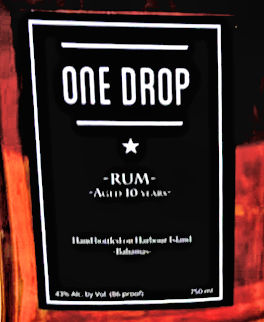
One Drop, The Latest From the People That Brought You Afrohead


     Now, the man behind Afrohead, master blender Toby Tyler, has launched his newest project, “One Drop” Rum, a rum hand-bottled in Harbour Island in The Bahamas that is a blend of 10- and 12-year-old Jamaican rum.  This is a full departure from Afrohead, a rum that comes from Trinidad.

     When it made its debut four years ago, Harbour Island’s Afrohead rum sent a shockwave through the industry.   Its superb design on the label and its drinkability was a wonderful and refreshing addition to the Caribbean’s rums.  It was bold, cool and, unlike so many other rum launches in recent years, it took in the traditions and history of the Bahamas.   Afrohead still needs more of a reminder to consumers that it is a classy premium rum expression and not simply a mixing partner for Coca-Cola.

     The aroma is a delight, with notes of candied tropical fruit, it has an exciting aroma that has notes of rhum agricole.   The flavor profile is marked by buttery apricot, pure vanilla bean, stone fruit and a hint of a dried-fruit.  This is a medium-bodied rum with a wonderful long-lasting finish.   Unlike many of the rums from Jamaica, with an overt funkiness, One Drop has got a real drinkability.  It is a marriage of funky with a smooth flavor and drinkable expression that can be enjoyed by both the lover of Jamaican and more traditional Caribbean rums.

Sunday, October 7, 2018

Sitting Under the Shade of Your Local Palm Tree

     Sitting on the beach gazing out on the Atlantic Ocean is so relaxing for me.  Nothing like sitting there and just being able to zone out and let the world turn from black an white to shades of gray and hours of rum and relaxation.


Saturday, October 6, 2018

Rum Has Made Strides to Return in 2018


     Its place in the canon of British inebriation was cemented thanks to the adventurous but often brutal history of imperialism.   Some of its earliest distillers were plantation slaves in the Caribbean, who fermented alcohol out of molasses from the sugar cane they were forced to harvest.  Kill-devil, as rum was often called, soon became intrinsic to Britain’s seafaring history, used variously as a way to stave off scurvy and as payment for thirsty sailors. The Royal Navy’s daily rum ration, or “tot”, was only abolished in 1970.  When Admiral Nelson died, according to legend his body was soused in brandy or rum to preserve it for the voyage home.  On arrival the booze had already been drained by thirsty sailors who had drilled a hole in the barrel, earning another nickname: “Nelson’s Blood”.   Throughout the British colonies, rum was used as currency and was made in many of the colonies and a major part of the "Triangle Trade".

     “The challenge with any spirit is to present it in its naked form with access to all of its benefits and faults,” said Walters. “With rum you need a lot of expertise.”  Unlike gin, which can be made relatively quickly with little more than ethanol and botanicals, rum is expensive and fiddly.  Importing molasses is costly – Walters gets his from Venezuela – while the tarry syrup is messy and hard to handle.  Yields are typically low because yeast, required for fermentation, does not respond well to the acidity of molasses.  “All the commercial odds are stacked against you,” Walters said.  Nonetheless, the effort is paying off. Sales of his three brands, led by flagship Old Salt Rum, were 40% higher than 2016, leapfrogging vodka sales in the process.

      “Rum cocktails are some of the most popular ones ... mojitos, daiquiris. And there’s a rise in tiki-style drinks too, Mai Tai’s, Pina Coladas etc.  “They not only use rum in abundance but may use several in one cocktail.”  He is also predicting an upsurge for spiced rums, usually made using imported spirits and infused with spices and other ingredients such as fruit peel.     People have gone to bourbon, whiskey and gin, but the natural sweetness and flavor of a good premium rum is bringing them back into the fold.


Friday, October 5, 2018

Do the Airports and Airlines Need Stricter Alcohol Control?


     Bar operators in airports are facing turbulent times thanks to passengers drinking to excess before take-off. Airlines want limits brought in to take care of the issue.   On any other occasion, a cocktail before breakfast would be likely to raise some issues. But once you’ve made it past airport security, an alcoholic beverage – even at 7 am, doesn’t seem quite so out of place.  There has been a substantial rise in the number of disruptive passenger incidents in the skies worldwide, causing calls to curb alcohol sales at airports.
     Being disruptive aboard a flight carries serious consequences, anyone disrupting a flight risks prosecution for being drunk on board an aircraft, acting in a troublesome manner or endangering the safety of an aircraft or its passengers can lead to a five­-year or longer prison sentence.   With the increasing number of incidents, Airlines and government officials are for more prosecutions to curb the violent and drunken behavior by airline passengers “The abusive behavior on an airplane is totally unacceptable, it upsets everyone else as well as jeopardizing flight safety.   
     It’s important that the airports and the airlines introduce preventative measures to curb excessive drinking, both at the airports and aboard the aircraft.  It is felt that this action would reduce problems being created, rather than allowing passengers to drink to excess before and during their flights.   Pointing the finger at one side or the other does little to find a solution, a team effort is of both ground and airline personnel can provide a powerful form of persuasion.   The International Air Transport Association (IATA) joined forces with the travel industry to launch a campaign designed to raise awareness of flying responsibly.   The spirits industry’s idea of  drinking less but better has good response from consumers, trading up to more premium brands and embracing the less of higher quality is better.  This message of moderate consumption needs to travel through to airport and airline industries as well.

Thursday, October 4, 2018

October is "Old Fashioned" Month and This is Week #1


     The history of the Old Fashioned is the history of cocktails.  It starts with “slings”, that in the early 1800’s was “liquor, water and sugar”.  The evolution of the cocktail changed it in the middle of the century, becoming a “bittered sling”.  Composed of liquor, water, sugar, and bitters, so what happened to the Old Fashioned?  How did it go from a Whiskey cocktail to its present place where there are so many varieties and ways to make it today?   As cocktails became more complex, many “improved” variations on existing recipes started to come into vogue in the late 1800s.  In order to differentiate between these newfangled elixirs and the original, patrons who wanted a glass of bourbon, sugar, and bitters without all the new stuff would ask for an “Old Fashioned” whiskey cocktail. This was quickly shortened to simply an “Old Fashioned”, the name under which it’s been known as for many decades since.
     The key to a good “Old Fashioned”, no matter what you use for liquor is the orange zest. You want to get a good, healthy chunk of fresh orange peel, with as little pith as possible, and you want to muddle it, releasing the essential oils to join the sugar, but the important thing is to mash that peel up good. The “Old Fashioned” is not clear, it is a murky cocktail, if it isn’t, you haven’t muddled enough.  The standard “Old Fashioned” is quite simple.  2.5 oz. Bourbon, 1 Sugar Cube, Heavy Dash Angostura Bitters and an Orange Zest.  Muddle the orange peel, sugar, and bitters at the bottom of a mixing glass until the orange peel is thoroughly beaten up. Add the bourbon and ice and stir thoroughly. Strain into a chilled “rocks glass” filled with fresh ice and garnish with an orange zest.

Bahama Bob’s Rum “Old Fashioned”
  • 2 ½ oz. Mount Gay Black Barrel Rum
  • 1 Sugar Cube
  • 2 Dashes of Angostura Bitters
  • 2 Orange Zests

The Cocktail is made the same way as the original, but good rum is the real significant difference.

Wednesday, October 3, 2018

Mount Gay Launches Limited Edition Peat Smoked Rum


     Rémy Cointreau-owned Mount Gay Rum has released the first bottling of its Master Blender Collection – XO, The Peat Smoke Expression.  Mount Gay master blender Allen Smith created the smoky iteration, which is a blend of column and pot still rums that have been matured for eight to 15 years in American oak barrels.  Only 6,120 bottles have been created, with 1,200 allocated for sale in the US at an RRP of US$250.     Bottled at 57% abv, Mount Gay XO, The Peat Smoke Expression is said to have aromas of stewed fruit, caramel, chocolate, Bourbon vanilla and smoke, with a “velvety texture” on the palate.   Last year, Mount Gay expanded its portfolio with the launch of Mount Gay 1703 Master Select, made with a blend of copper column and copper pot rums aged between 10 and 30 years.

      “It is with great pride that we introduce you to the first edition of our Master Blender Collection: XO The Peat Smoke Expression. For this limited edition, I have worked to capture the perfect balance of elegant rum overtones and mellow, peated whisky undertones. This one-of-a-kind blend is sure to please the most discerning of palates with its unconventional character, freshness and aromatic complexity.” Allen Smith   A long-standing Barbadian tradition, Mount Gay rums are handcrafted from a blend of single column and double copper pot distillates and matured in toasted oak barrels, delivering aromatic, flavorful taste, body and refined character.
          This limited edition is now available for Pre-Order. Orders will be fulfilled on a first-come, first-served basis until inventory has sold out. Orders will be available for shipping by the week of October 15th. Your credit card will be charged at the time of shipping.   This product is only available for delivery in the following states: AZ, CA, CO, CT, DC, FL, IL, LA, MD, MA, MI, MO, NE, NV, NH, NJ, NY, ND, SC, TX, WA, WI, WY.

 “Every great story begins with a time and a place. For Mount Gay, that time and place is the Caribbean Island of Barbados, where we've been making rum since 1703.ORIGINS Mount Gay Rum is the product of 315 years of knowledge, experience, and refinement applied to the process of making rum. Each of our rum’s complex flavors have been coaxed from natural ingredients: only the finest sugar cane molasses and pure Bajan water that's filtered through the coral heart of the island are selected to create Mount Gay rums. 


Tuesday, October 2, 2018

The States That Drink the Most Alcohol in America, Mapped and Ranked


     How do your drinking habits stack up against your neighbors’? And how about versus those on the opposite side of the country?   We analyzed data from annual alcohol surveys and reports to see who is drinking the most, and where.

     The East Coast is home to three of the top five hardest-drinking states, although no region stands alone. The 30 states consuming more than 2.31 gallons of alcohol per year are pretty geographically diverse, stretching from Maine to Texas to California to Hawaii.  Utah residents consume the least alcohol, perhaps unsurprisingly, given the state’s robust drinking laws (although there are creative distillers making their making the state’s capital).

     Curious to know where your state lands?   


Monday, October 1, 2018

Richard Seale

     Richard Seale has published on his Facebook page a document that refers to the protection of Barbados Rum.  This is a very important document that will lead to giving their rums a special set of rules that determine their “Geographical Indication”.  This is a very necessary thing to take rum out of the realm of a pirates concoction that can be made in any way a person wants to, adding anything they want to as long as it is made from a derivative of the sugarcane is rum.  Barbados, like Jamaica and Martinique, want their rum to be specific to their geographic locations.  

THE PROTECTION OF BARBADOS RUM
As Jamaica has completed their Geographical Indication for “Jamaican Rum” and Barbados moves to completion of their GI, it becomes increasingly important to dispel the canards around this important process.
With rum we have many canards - rum has no rules - rum is diverse and varied because of this wonderful lack of rules. Unlike other spirits, we are told Rum has no “global rules”. And that there are efforts to have a global rule which will crush our diversity.
A recent canard is that a GI (a registered intellectual property) is a further threat to this diversity and a threat to “innovation”.
The irony of this situation is that a GI seeks to preserve and protect this diversity. It is the essential tool by which this is accomplished. And the dreaded fear of selling rum under one “unified” rule is EXACTLY WHAT HAPPENS NOW AND IS PRECISELY WHAT A GI WILL SOLVE.
If Caribbean producers sell rum into the US, it is not the standards of identity (“the rules”) of Jamaica, Martinique or Barbados that apply. It is the rules of the United States TTB that apply. That is right, despite being from three very different and diverse rum producing countries, they will be sold in the US under the same ONE rule. This means that although AGAINST THE LAW OF JAMAICA to add anything to rum besides caramel a Jamaica Rum can be sold in the US with added flavors included sugar (and labeled as Jamaican Rum) because the generic rule for Rum sold in the US allows blenders to be added to any rum.
But the situation is very different for the spirits produced by developed countries. The United States TTB will enforce the rules of Scotland for a Scotch Whisky sold in the US. The United States TTB will enforce the rules of Cognac for a Cognac sold in in the US. The US will not protect a Jamaican Rum or a Barbadian Rum from adulteration in the US. The US does not control the use of the word ‘Agricole’ in the US market leading to all sorts of hideous products, not remotely consistent with the standards of ‘Agricole’ being legally labeled as Agricole
Now the US does not directly recognize GIs so creating a GI alone will not be enough to solve this issue in the US but the US illustrates the challenge of protecting our diversity very well and the GI will be the necessary first step.
The same situation applies in the EU save for the fact that the EU does recognize some GIs at this point (for example the word Agricole is protected) and it is hoped that they will recognize the GIs of Jamaican and Barbados in due course. At the moment, a Jamaica Rum and a Barbados Rum are sold in the EU under one and the same EU rule. If the EU recognizes our individual GIs, it means that a Barbados Rum sold in the EU will need to meet “Barbados Rules” and a Jamaica Rum will need to meet “Jamaica Rules”. That diversity everyone wants will be protected - that dreaded ‘global rule’ for rum, avoided.
Because the EU recognizes the GI for Scotch Whisky, the additional requirements to meet the standards of identity for Scotch Whisky over the EU generic standard for whisky are recognized and the label “Scotch Whisky” is protected throughout the EU. The GI for Jamaica Rum and the draft GI for Barbados pose additional requirements, over and above the generic EU definition of Rum (the “one” rule) to protect and preserve the identity of these rums. The GI is the tool by which we will protect our diversity. The GI is the tool by which we avoid having to produce under one “global rule”.
What of the claim that a GI stifles innovation?
Lets be clear what exactly is innovation. Marketing gimmicks that do not add value is not innovation. But a GI is not a legal restraint on a producer. All producers continue to operate under the existing laws. A GI is a piece of intellectual property protecting how a type of “trademark” can be used - it places no law whatsoever on production. It constrains no one from producing as they please. It constrains them from labelling as they please. A Jamaican musician can play any tune just do not expect it to be called reggae unless it sounds like reggae.
So what are these innovation stifling constraints in the Barbados and Jamaica GIs:
Barbadian trained operators
fermented and distilled in Barbados/Jamaica
Saccharomyces types only for yeast
local water source only
free of additives except caramel which must only be used for color (Barbados draft GI has a quantitative albeit generous limit on caramel) - the same restriction in Scotch
minimum ester levels for Jamaica rum (by marque)
aged in oak (“small” is the Jamaica requirement, 700 liters maximum for Barbados)
aged entirely in Jamaica (a min of two years in Barbados).
Jamaica rum must pass an organoleptic test
I will address the wisdom of “restricting to oak” in another post, save to say that is hardly onerous and Scotch Whisky has the same “restriction”. There is a plethora of excellent oak casks available for "innovation". One obvious point is that it keeps a point of difference between rum and cachaca and preserves an important distinction in our social and economic history.
Aging is Europe is a product of the colonial way of doing business where only limited value was earned in the colonies and product whether it be sugar, rum or bauxite was to shipped at the lowest commodity value. The advent had nothing whatsoever to do with product quality and it is absurd as ageing Scotch Whisky in southern Spain. It simply steals value from the local producers leaving rich European brands and decrepit local operations. The Barbados GI arguably does not go far enough. Bravo to Jamaica - this “restraint” is worth millions in forex earnings.
Conforming Rums must use the words “certified Geographical Indication” on all documents including labels. Non conforming rums can be made but they will not be able to simply state “Jamaican Rum” or “Barbados Rum” and most importantly - “the use of any indication or sign which may cause a buyer to believe that a rum has the right to use the protected Geographical Indication “Jamaica Rum”, although it does not satisfy all the conditions defined in the present decree will be prosecuted”.
You cannot sell your product under another’s brand because of trademark law and you cannot sell your product under another’s protected origin because of intellectual property law. You add something to Jamaica Rum - it is no longer Jamaican Rum - that is the law of the land of Jamaica. A recognized Jamaican GI means you cannot avoid Jamaican law by selling in Europe.
So you can continue to flavor Jamaica Rum you just cannot label it in a way that may cause confusion to the buyer that they have purchased certified Jamaica Rum. Diversity created by Jamaicans protected.
Europeans created the concept of protected origins and it is used extensively by developed countries to develop and protect the intrinsic value of their products. Our time is now.
We and fellow Barbadian owned producer St Nicholas Abbey are on the record as supporting the Barbados GI as drafted.


Sunday, September 30, 2018

Wednesday Night Sundown at the Hurricane Hole

     My Wednesday nights are usually spent at the Hurricane Hole here on Stock Island, across the bridge from Key West.  It is our karaoke night with a few rum cocktails to make the whole evening great.  Last Wednesday the last of the sunset reflected off of the water along with the floating tiki boat made for a really beautiful end of the day.


Saturday, September 29, 2018

Angostura Releases No. 1 Cask Series Sherry Cask Finished Rum

Angosture No. 1 Oloroso Sherry Cask

     The House of Angostura® is thrilled to announce the newest addition to its award-winning Cask Collection, No. 1 Oloroso Sherry, which will arrive this month, on 26 September, 2018.    Bottled at 40% abv, Angostura Cask Collection No.1 Oloroso Sherry has been created with a combination of techniques from the Old World and New World.  Only 16,200 bottles will be made available in select markets worldwide.  No. 1 Oloroso Sherry.  The predecessors in the No. 1 Cask Series Collection are No. 1 First Fill Bourbon (2013), No. 1 French Oak (2015) and now No. 1 Oloroso Sherry.


     This is the third edition from Angostura's Cask Collection, a range of limited edition which is entirely dedicated to rums matured in different types of casks. "Angostura® Cask Collection No.1 Oloroso Sherry is a masterwork, a one-of-a-kind rum that reaches the highest achievement in the rum world – an exquisite roundness and smoothness without sacrificing personality," says Angostura's Chief Executive Officer, Genevieve Jodhan.

     Bottled at 40% and the first rum that Angostura has matured in sherry casks, Angostura Cask Collection No. 1 Oloroso Sherry has been created with a fusion of techniques learned from the Old World and perfected in the New World. This silky smooth, complex rum is a beautiful amber with superb clarity. Warm, rounded aromas and a delicate nose of cocoa, molasses, oak and sweet prune inform the well-rounded blend, which offers flavors of woodiness, roasted nuts and hints of sherry, and a medium rounded and oaky finish.

     "The House of Angostura® has been experimenting with ageing rum in different types of casks and techniques for many years, but this is the first time we have used Oloroso Sherry Casks to mature one of our rums.  We wanted to explore the results of a rum aged in American oak with extended time in an Oloroso Sherry Cask,  the blend of aged rums was finished for nine more months in Oloroso Sherry Casks."


Friday, September 28, 2018

Bahama Bob’s Smokey Papa's Pilar Old Fashioned


     Here is an idea for a wonderful way to enjoy a cocktail as the weather begins to cool a bit and we light the fireplaces and enjoy out evenings with this idea for a different kind of Old Fashioned.  This has a very unique taste and aroma and I know I found it to be just perfect to sit and sip in the evening.

Bahama Bob’s Smokey Papa's Pilar Old Fashioned

  • 2 oz. Pilar Dark Rum
  • 1/4 oz. Simple Syrup
  • 4 dashes Angostura  Bitters
  • Apple Wood Chip
  • Mesquite Wood Chip


Take an old Fashioned glass and put ice in it and the rum, simple syrup and bitters in and stir until mixed,  Wit a torch of some sort, light a apple chip on fire until it starts to smoke.  Hold your shaker tin inverted over the smoking chip until the smoke rolls out around the bottom.  Place it inverted over the old fashioned glass and turn it over and shake very gently.  Remove the old fashioned from the shaker and top up with ice.  Repeat the smoke filling of the shaker tin and set it over the glass.  Remove the tin as you serve it and the smoke will remain in the glass giving you a unique aroma and taste.

Thursday, September 27, 2018

All Shook Up Today Launches Its Newest Flavor Exclusively into Tesco Flamingo Colada


     All Shook Up cocktails launches its new flavor Flamingo Colada, hitting shelves this week. Flamingo Colada is a delicious, fruit flavored twist on the classic Pina Colada.  The RTS can is a mix of natural coconut, grenadine and lime flavors shaken with white rum and fruit alcohol making for a taste that transports you to an exotic paradise.   Priced at $1.65, Flamingo Colada comes in 250ml cans, with aesthetics tapping into fashion, beauty and social culture. The 4.5% ABV millennial pink liquid is paired with a chic and brightly patterned flamingo decorated ‘Instagramable’ can design.
     Successfully blowing up on social media upon launch, selling hundreds of thousands of cans per month, All Shook Up consumers went wild for the new flavor the Passion Fruit Martini variant. With All Shook Up social content and PR coverage already reaching 17,700,000 plus consumers, they predict Flamingo Colada will take the brand to the next stage of Instagram domination.
     All Shook Up Brand Controller Christian Sarginson, said: “Flamingo Colada marks an exciting time for Global Brands as we expand our All Shook Up brand in Tesco. Consumers are demanding new, on trend flavors to tie in with their fast paced, social media driven lifestyle. Through the launch of Flamingo Colada, we are combining one of the nation’s best loved cocktails, together with one of the biggest trends of this year; flamingos. Plus, canned cocktails are growing +30% in value and +28% in volume YoY in volume YoY as ease becomes one of the number one factors when 21-24-years old purchase drinks.”

Wednesday, September 26, 2018

David Wolkowsky Dies in Key West September 24, 2018 at 99

"Mr. Key West" - David Wolkowsky 1919 -2018

     Key West has lost one of its truly incredible people Sunday night, David Wolkowsky, whose   Born in Key West on August 25, 1919, his grandfather had opened a general store there in the 1880’s, attended the University of Pennsylvania, then built a career restoring buildings in Philadelphia. He returned to Key West at the age of 42, when his father died. He had planned to retire, but once he saw Key West’s buildings and its relatively blank canvas, he saw a world of possibilities.
 
vision for Key West contributed so much to the transformation from an island in in need of a “face lift” into a colorful tourist destination that draws artists, writers and so many other colorful people.

     He was known as “Mr. Key West” for the way he shaped the city’s downtown since the 1960s, renovating, restoring and even relocating the weathered buildings that created a quaint downtown for tourists and a haven for artists.  Wolkowsky opened the Pier House hotel in 1968, which began to draw visitors from around the country, including author Truman Capote, who noted its air of “elegant inefficiency.” Part developer and part preservationist, Wolkowsky renovated more properties than he could remember, including Ernest Hemingway’s original watering hole, Capt. Tony’s Saloon — which Wolkowsky and his sisters inherited from their father.  In addition, The Kress building, an old dime store in the heart of Key West. It’s now home to both Jimmy Buffett’s Margaritaville Cafe and the rooftop penthouse Wolkowsky had built for himself.  Much of Duval Street and Mallory Square, two major tourist areas, were originally Wolkowsky creations.        Wolkowsky summed up his drive to create: “I couldn’t bear to sit around and collect baseball cards,”

Ballast Key Today
     He bought Ballast Key, which once belonged to the U.S. Navy, and a current owner he negotiated with to secure the island in 1974. Over years, Wolkowsky would built his home on the island’s southern edge.  His “big metal shack” as he called it was assembled piece by piece, he carried out to the island. The four-bedroom home on Ballast is based on the Northwest Channel lighthouse, known as the “Hemingway Stilts,” that burned in 1971. Wolkowsky’s nephew, Timothy Greenfield-Sanders, a
Ballast Key Home Early Picture
prominent photographer and filmmaker, calls it “a simple little family retreat — eight miles off Key West.”  “He put every single tree on that island,” along with plumbing, desalination tanks, and a 550-foot dock.  When asked what is out there on Ballast Key, he said, “I brought cashmere to Ballast Key.” 
Monroe County Commission voted to rename the island David Wolkowsky Key after his death, although the ultimate decision rests with the U.S. Board on Geographic Names.  Wolkowsky watched as the vote was taken from a wheelchair in the audience, telling reporters in his dry manner, “I wanted to see the commission, en masse.”

     He had celebrated his birthday on Aug. 25 in true Wolkowsky style: a house full of free-spirited guests, clouds of white orchids, popping champagne corks and his sister, Ruth Greenfield of Miami, a classically trained concert pianist and civil rights pioneer, playing happy birthday on the grand piano as the crowd sang along. He presided from the white couch, dressed in linen, his trademark Panama hats stacked nearby. And instead of receiving gifts, he gave them: a black pearl necklace in a jeweler’s box for each of the several dozen women who attended.

     He was known for his taste that mixed high and low. In the penthouse, an expensive Art Deco-style Aubusson rug lay on a floor of polished plywood. On Ballast Key, he happily served guests turkey hot dogs and chips — with a chocolate soufflé for desert and a priceless view in every direction.

     His colorful life and vision for Key West is like no other and will be truly missed here in Key West.  Rest in Peace David Wolkowsky, you have earned it.

Tuesday, September 25, 2018

California Becomes the First U.S. State to Ban the Use of Plastic Straws in Restaurants


     California has become the first US state to enforce a ban on restaurants handing out plastic straws to diners unless specifically asked for them, in a move lawmakers hope will make customers “pause and think again” about their disposable plastic consumption.  California Governor Jerry Brown signed a bill on Thursday which prevents restaurants from giving plastic straws to customers, but warned that the law, which comes into effect on 1 January, would be limited in its scope.  The law only applies to the state’s dine-in restaurants, excluding cafes, fast-food outlets and businesses which will be allowed to provide takeaway options.

     Brown said the law is still a good step towards challenging the widespread use of disposable plastic in the on-trade.  “Plastic has helped advance innovation in our society, but our infatuation with single-use convenience has led to disastrous worldwide consequences, Brown said, according to the San Francisco Chronicle.  “It is a very small step to make a customer who wants a plastic straw ask for it, and it might make them pause and think again about an alternative.  “But one thing is clear, we must find ways to reduce and eventually eliminate single-use plastic products.  “Plastics, in all forms — straws, bottles, packaging, bags, etc. — are choking our planet.”

A Sea of Plastic Waste
     The bill comes as many hospitality firms and restaurant groups in the US have already begun to phase out the use of plastic straws on their premises.   Hilton Hotel group has said it plans to remove plastic straws from all managed hotels around the world by the end of 2018, as well as axing plastic water bottles from its conference rooms.   Then in July, Marriott International announced plans to ban plastic straws from its hotels worldwide, months after the chain committed to cutting down waste in its UK businesses.  The chain said in May that guests get through around 5 million plastic straws each year, while people attending business meetings and conferences at Hilton hotels use up to 20 million water bottles annually.   Bacardi was among the first to call time on plastic straws and stirrers, banningtheir use across its events in 2016 in an effort to reduce waste as part of its ‘Good Spirited’ campaign, and Pernod Ricard followed suit in January of 2018.


Monday, September 24, 2018

An Italiam Style Daiquiri

     There are a lot of combinations of liquors and mixes out there that end up being cocktails, but there are only a few combinations that end up being great daiquiries,   Here is an idea for one that dmight be able to become one of your all time favorites.  There are so many combinations that are called daiquiri, but this one might be one that you put dinto your cocktail notebook to pull up every now and again.


Bahama Bob’s “Italian Style” Daiquiri 
  • 2 oz. Dzama Dark Rum
  • ½ oz. Amaro de Toscana
  • 1 oz. Lime Juice
  • ¾ oz. Orgeat

Place all ingredients into a shaker filled with ice and shake until chilled, strain into a cocktail glass filled with fresh ice and garnish with mint sprigs.

Sunday, September 23, 2018

Another Cuba Day Trip Ahead

     In October I'm heading to Havana, Cuba again to do a rum tasting.  I love these one day excursions to talk about one of my favorite subjects in a land where rum is a very important part of their economy.

     When I think about rum in Cuba I think about Santiago de Cuba, the area where the daiquiri was created and the original rum home of the Bacardi family.  There are still many reminders for the people of the "revolucion" on the walls throughout Cuba.  This one in in Santiago de Cuba.


Saturday, September 22, 2018

Middle-Aged Adults Are More Concerned About Reputation Than Health When Drinking Alcohol


     Alcohol can negatively affect your health in several ways, but middle-aged drinkers aren’t very concerned about the risks. They are more worried about their reputation, according to a new report.  Researchers from the University of Adelaide in Australia recently conducted a study, published in the BMC Public Health Journal, to explore drinking patterns among “non-problematized” middle-aged adults.   To do so, they examined nine previous assessments from Britain, Austria, Japan and Norway and investigated how drinking is influenced by four essential themes: gender, play, identity, and learning to drink.
     After analyzing the results, they found people aged 30 to 65 did not identify health as a significant concern in relation to alcohol consumption, unless they were likely to harm another. “Health was either described as a minor concern or not considered at all,” the team said in the study.  Instead, they cared more about displaying the negative effects of drinking, such as having slurred speech, vomiting or experiencing a hangover. They believed these behaviors were associated with those with drinking problems. The participants also often mentioned the need to be able to meet work and domestic responsibilities, particularly among parents and caregivers.

     “Acceptable drinking was framed as respectable drinking that was appropriate to one’s age or stage of life and which allowed participants to meet their responsibilities,” the authors wrote. “By contrast, unacceptable drinking was drinking that was inappropriate to one’s age or stage of life and/or prevented one from meeting their responsibilities.”

     When it came to gender, they discovered women were more likely to be scrutinized for how much they drank compared to men, while men were more criticized for what they drank. For example, some subjects “drew on the social capital of wine connoisseurship to construct alternate masculinities, and other men stated that drinking outside of the ‘pints in pubs’ model could be done in ‘exceptional circumstances’ such as holidays and special occasions,” the team stated.

      “Our results offer insights into how public health messages about the health effects of alcohol consumption may be received by middle-aged non-problematized drinkers,” the authors concluded, “and the barriers that may prevent this group from receiving and acting on these messages.”


Friday, September 21, 2018

Grenada, Carriacou, and Petite Martinique Announce the Ban on Styrofoam Products


     Grenada is joining a number of Caricom Caribbean Community countries that have, in the recent past, announced plans to ban the use of styrofoam.   The Keith Mitchell Administration has given September 1, 2018 as the deadline for a ban on the importation of the product as the initial step in a phased approach to the eradication of styrofoam and reduction of single-use plastics, in keeping with the Non-Biodegradable Waste Control Act, which was passed in Parliament this year.

      The second phase will be a ban on the sale of styrofoam in the tri-island state, effective March 1, 2019, and by April 1, 2019, prohibiting the sale and offer for sale of food in or with these products. According to Climate Resilience and the Environment Minister Simon Stiell, ultimately, there should be “zero styrofoam across Grenada, Carriacou and Petite Martinique”,     Speaking at the weekly Cabinet meeting, Stiell said that the ban is not being instituted arbitrarily, but in consultation with importers and other stakeholders.

The environment minister said it is encouraging to note that “many restaurants and many stores have already transitioned to alternative products, and the stated timelines are agreed upon by both importers and Government”.


Thursday, September 20, 2018

Interesting Distilleries to Visit in the Caribbean

 River Antoine Distillery - Grenada

     You will find Rivers Rum 'up north', near the beautiful (but treacherous) north east coast. Not  far from Tivoli, not far from Lake Antoine. The place dates from 1785, though there may have been distilling activity there even further back, but this is a distillery that runs all year. 
     A bit of a contradiction: the concentration of sugar in cane is at its highest during the dry season (Jan to May), but the water wheel which powers the cane press is obviously more likely to work when there is plenty of water in the river, during the rainy season (June - Dec.)   The simplicity and antiquity of the place is what makes River Antoine so interesting.. Bundles of cane are crushed twice, then placed in the island's only railway truck which is trundled along the island's only railway line for the very short trip to a tip. Here the cane dries in the sun and, now known as 'bagasse', is used as fertilizer for the cane fields.

Foursquare Rum Distillery & Heritage Park - Barbados


     Hidden in the southern countryside region of Barbados, on a former sugar plantation of about 8 acres, sits the Foursquare Rum Distillery and Heritage Park. This working rum factory that Richard Seale masterfully operates is world renown for its rums, producing a wide range including the flavorful brands like  Doorly's, Old Brigand, E.S.A.Field and many more. Foursquare Rum Distillery is the proud winner of the Rum Distillery of the Year in November 2016 at the IWSC in London, UK.  
     This working rum factory, the Heritage Park with its historic buildings, colonial architecture and folk museum, offers a step back in time and a tribute to the important role that sugar and rum has played in Barbados' history.

Cayman Spirits - Grand Cayman
 
     Opened in June 2013, our new Cayman Spirits Company Distillery is Grand Cayman’s largest 
Distillery, and the only source of handcrafted spirits in the islands. We’d love to show you around.  Come get a behind-the-scenes look at our unique approach. Inside the custom-built 5000 square foot facility you’ll see our 1200 gallon Vendome copper pot still, the 30 foot tall Gun Bay Vodka tower, and our original Christian Carl pot still we use to perfect Seven Fathoms Rum.
     
St. Lucia Distillery - St. Lucia

     St Lucia Distillers Group of Companies emerged from a tradition of the on-site, house-special rum production that was a common feature of the West Indian sugar plantation.   By the late 1950s, two distilleries remained, one at Dennery, the site of the Barnard family plantation, and the other Geest-owned at Roseau, the location of the now St Lucia Distillers Group of Companies.   St Lucia Distillers Group of Companies was formed in 1972 when the two distilleries amalgamated.    The Barnard family bought out the Geest shares in 1992 and in 1997 sold shares to Trinidad-based Angostura Ltd.  In 2005 the Barnard family, planters and rum distillers for over a century sold to CLICO, with third generation rum-maker Laurie Barnard staying on as Managing Director.
St Lucia Distillers Group of Companies, in the thirty nine (39) years since its inception, has grown from producing a single-label mass-market rum to a portfolio of premium rums and liqueurs.

St. Nicolas Abbey – Barbados
 
St Nicholas Abbey has always been a sugar plantation house. The exact origin of its name is not known but rumored to have been named after George Nicholas, husband to Berringer's granddaughter, Susanna.  Berringer was killed in a duel with his neighbor, Sir John Yeamans, who then married Berringer's widow and claimed the abbey as his property.  The abbey was no longer a functioning plantation after 1947.   Sugar has been grown on the plantation since 1640 and there is still the evidence of the mill and sugar making edifices. Sugar was processed on the property until 1947.  Since 2006, the abbey is owned by local Barbadian architect, Larry Warren. Warren has restored the abbey as well as the rum making distillery on the sight.  YoWarren is currently developing a small private railway system on the property, the St. Nicholas Abbey Heritage Railway, to be completed by the end of 2018.  St Nicholas Abbey is currently a well-preserved museum, successfully recreating 18th-century plantation life.  There is a rare 1930s film of life on a sugar plantation that is available for viewing in the museum. Listed by the Barbados Tourism Authority as one of the "Seven Wonders of Barbados.   The property has attracted several thousand visitors a year.

     This is only five of the ones that I have visited. Id will have to cover so many of the others that I have visited over the years.