Tuesday, October 10, 2017

Always a Clean Finish or How Don Q is Going Green in Puerto Rico

Roberto Serralles
     Puerto Ricans have long been known for their love of rum, and particularly their love of Don Q.   More than two-thirds of the island’s population drinks this particular rum, which is distilled, manufactured, and distributed world-wide from Destilería Serrallés headquarters in Ponce, Puerto Rico.   Not only known for quality products, in the last decade the Serrallés family has made strides in implementing sustainable technology and reducing their foot print on the environment.  This issue has been reverberating throughout the spirit-making industry.
     Many of these green initiatives came directly from Roberto Serrallés, a sixth-generation distiller who left Puerto Rico to become a teacher, but wound up back at his family’s distillery.   “I wanted to teach; that was my calling in life,” says Roberto Serrallés, “I knew I wanted to teach at the university level, which requires a PhD, and that’s part of why I ended up in Environmental Sciences. As I was writing my dissertation, I got a call from Felix Juan Serrallés, Jr., my father and company president and CEO.  He said he needed help with the distillery’s wastewater system, so, I was initially hired on as a contractor and worked on this wastewater treatment system for years that we now have up and running.”
     Rum, and spirit-making in general, produces a lot of wastewater. “When you distill rum, wastewater ends up being five times the volume of the spirit produced”.   “We want to take that wastewater and reuse it, turn it into some form of energy, Serralles explains.   I see this as an extension of the process of rum-making, which begins with molasses, a byproduct of sugar making.”
     The Serrallés family began as sugarcane farmers, and rum-making naturally evolved as a way to utilize the leftover molasses.   “We took a waste stream and turned it into something value added,” says Serrallés. Eliminating wastewater runoff into nearby waterways also aligned with a perspective on environmental stewardship that Roberto learned during his PhD studies.  “Some of my guiding principles come from the field of industrial ecology, specifically Marian Chertow, who teaches at Yale. Part of her work looks at the lack of waste in naturally occurring systems and suggests we should mimic that in industry.”  “There is no waste in nature, and that is an ideal system. So, how do we find a use for all our outputs?”  This mission has led to significant changes at Destilería Serrallés over the last decade. Serrallés focused his work on the system the distillery uses for wastewater treatment, which several other distillers now emulate.  It captures carbon dioxide released during the fermentation process and distributes it to local soda producers, reducing greenhouse gas emissions.
    Wastewater from the distillation process has a myriad of uses, finding its way into compost, biofuel, and irrigation water. Don Q has also has completely eliminated wastewater discharge into nearby oceans.  “They came to us and wanted to establish a partnership and we were thrilled.    We monitor the water in Puerto Rico, and we also do work protecting coral reefs, which are very sensitive to changes in water temperature and nitrification.  These potential impacts from wastewater discharge at nearby distilleries. Keeping wastewater out of the ocean keeps helps keep reef systems healthy.  In the future, Serrallés hopes to continue developing sustainable technologies for Destilería Serrallés, and encouraging the implementation of those methods industrywide. “Sustainability is not a destination,” he says. “It’s a commitment to a continual process. We are trying, and it’s about trying to be better every day.”

     This is a great conceptual project, especially when you consider that rum came about as a means of disposing of the waste molasses from the sugar making industry.

Monday, October 9, 2017

Jack-O'Blast from Captain Morgan is Back This Fall

     Captain Morgan Jack-O'Blast is returning this season! Captain Morgan Jack-O’Blast, the intensely delicious pumpkin spiced shot, is back on shelves nationwide.  Jack-O’Blast is a fall-inspired shot that blends Caribbean rum with favorite seasonal flavors – including fresh pumpkin, cinnamon and other autumnal spices. Best enjoyed as a chilled shot, Jack-O’Blast can also be served as a drop shot or in a number of seasonal drink recipes.


     The pumpkin spiced rum (60 proof, 30% ABV) with a suggested retail price of $15.99 for a 750 ml bottle and is currently available nationwide for a limited time this fall.


Sunday, October 8, 2017

Lonely Sailor Arrives

     These days there are very few boats out on the Gulf.  Today I spotted a sailboat as it was arriving here at Sunset Marina.  It looked alone and had a relatively calm sea surrounding her as she came in.  It is a good sign to see boats back out on the waters, especially after a month of locating and marking all of the sunken and free floating vessels that broke away or were sunk by Irma.  Makes for a pretty picture in my mind anyway.


Saturday, October 7, 2017

Week Four, Debris is the Biggest Issue

Debris on Eaton Street
     As week complete week four post-Irma, the debris removal was the most noticeable activity.  Lots of trucks and scoop tractors are going from street to street removing the debris from the edges of the roads.  This has revealed sidewalks, parking spaces and other important items.  It also is allowing the cable TV and telephone people to get to their lines and begin restoring them to many homes that have been without for about a month.


Chunks of Broken Floating Docks

   Pieces of floating docks are being removed from the waterways around Key West and repair to the docking systems are being taken care of.  Hauling these old pieces of the docks is going to be a monumental task to remove them.


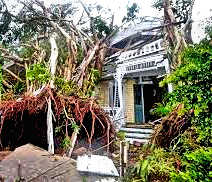
Shel Silverstein House in Key West
    As debris is removed it has revealed the damage to the late Shel  Silverstein's historic house.  There is a lot of damage that has been revealed at the downed trees are being removed.  Ernest Hemingway's House looks to have only suffered damage to the landscaping, from an outside view of the house driving by.
Silverstein's

     More and more of the businesses are opening up and the ones that have been open for awhile are beginning to get busier.  More tourists are beginning to show up filling the hotels, restaurants, bars, and tour buses and trains.  All of these are signs of Key West coming out from under the mess caused by Irma.  I feel like in a few more weeks we will be getting a feeling of "normality" in our lives.

     Even up the keys where the damage was  horrendous, the are signs of recovery peaking their head up.  Still a long way to go, but progress can be seen.

Friday, October 6, 2017

Isla de Tesoro Rum The Favorite of the Late Fidel Castro


      “Santiago de Cuba is considered one of the best rums in Cuba”.   Cheaper bottles are aged from three to five years, but rum aged 20 to 25 years also is available, and the price goes up accordingly.  Among the most expensive bottles for sale are Isla de Tesoro (Treasure Island), available in a special ceramic jug and packed in a wooden chest, made to celebrate the 500th anniversary of the city of Santiago.  Isla de Tesoro sells for about $747, which was produced in a limited edition, and the favorite of the late Fidel Castro.  “This is a rum that you won’t find everywhere or even all over Cuba.”  Cuban rum brand Isla del Tesoro, once produced for revolutionary Fidel Castro, has been made available in the UK through distributor Spirit Cartel.   “It’s a rum for connoisseurs and aficionados. In my opinion, no rum collection is complete without a bottle of ‘El Caballo’s’ personal rum.   We can all be a little Fidelista even if we are not communist.”
     For 50 years Isla del Tesoro, or ‘treasure island’, was distilled for Castro’s personal consumption; gifted to visiting international dignitaries and senior members of Cuban government. Until recently the rum was not commercially available, and even now production is limited.   The original recipe for Isla del Tesoro was created from a collection of rums appropriated by the Cuban State from rum-producing families fleeing the Revolution. They were discovered in 1959 ageing in a cellar nicknamed the ‘Cathedral of Light Rum’.

The Original Bacardi Rum Factory
      There’s also a Bacardi connection to the rum factory in Santiago. It’s the old Bacardi factory, which was expropriated by the Cuban government on Oct. 15, 1960, along with the company’s Santiago headquarters. The day before, the Bacardi sales office in Havana was nationalized.  Bacardi, which is now headquartered in Bermuda, had made rum in Cuba since 1862.

     The rum is presented in an individually-numbered ceramic decanter encased in a handmade wooden chest.   A map accompanies the bottle, depicting the location of Isla del Tesoro, now called Isla de la Juventud.  Charles Marshall, Spirit Cartel, said: “Isla del Tesoro is truly the stuff of legend. We feel it’s our own little revolution and certainly a piece of history, just getting our hands on the UK distribution for the rum.   “The romance surrounding this rum, contributes to the myth that it has come to represent the Cuban people’s soul: pure and full of spirit, whilst maintaining a real sense of dignity and elegance.

Thursday, October 5, 2017

Diplomático Rum Launches a New Limited Edition Distillery Collection

Diplomatico Distillery Collection

      Venezuelan rum company Diplomático brand is set to release two expressions in a new limited-edition range.   Designed to showcase Diplomático’s “diverse” distillation processes, Diplomático is to launch Single Batch Kettle and Single Barbet Column expressions.  The range, which launches with Single Batch Kettle and Single Barbet Column rums, is a result of Diplomático’s unique style of merging different distillation methods to produce a wide range of complex distillates.

Single Batch Kettle Still

     Single Batch Kettle was made with a batch kettle still that was brought to the distillery in 1959.  The batch distillation method was originally employed in Canada for the production of American whiskey. The “complex” and medium-bodied expression is made from sugar cane honeys, and is aged in American white oak barrels.

Double Barbet Column Still
     The Barbet Column distillation system, originally created in France was also brought to the distillery in 1959. The Barbet column is made of 100% copper, a type of metal that facilitates to the elimination of undesirable sulphur compounds that form during the fermentation process.   Described as having a “strong fruity” profile, Single Barbet Column expression is aged in American white oak barrels and uses high-quality sugar cane molasses.
José Rafael Ballesteros, CEO
     José Rafael Ballesteros, Diplomático’s CEO, said “The Diplomático brand name has become familiar to lovers of fine dark spirits, few are aware of the history of the company behind the brand, Destilerías Unidas S.A. (DUSA). DUSA’s distillery was originally created in 1959 by local rum producers and Seagram’s International, at that time the largest distiller of alcoholic beverages in the world.   We recognize that the rich distillation heritage left by Seagram’s is at the heart of Diplomático’s elaboration process today.”  “We are excited that the Distillery Collection gives rum lovers the chance to explore the history and distillation know-how of Diplomático, and what goes in to making our rums so special.”
Tito Cordero
     Due for official launch at this October’s Bar Convent Berlin, The Distillery Collection showcases Diplomático’s diverse distillation processes. Over the years, Diplomático has developed a unique style of merging different distillation methods to produce a wide range of complex distillates. The Distillery Collection highlights these distillation systems with two new expressions, a Single Batch Kettle rum and a Single Barbet Column rum.  A variety of distillates, with their distinctive aromas and taste profiles, characterizes Diplomático rums and allows the Maestros Roneros, Tito Cordero, to create one-of-a-kind blends. The Distillery Collection, on the other hand, offers rum aficionados the opportunity to discover these single distillates in their purest form, featuring each rum’s individual personality.  Given the unique sensorial profiles of these individual expressions, it is recommended to savor them neat.
 Both expressions are available at a suggested price of $81.00.

Wednesday, October 4, 2017

Bacardi names Mahesh Madhavan CEO Effective Immediately

Mahesh Madhaven and Mike Dolan
    Mahesh Madhavan has officially taken over from Mike Dolan as CEO of Bacardi, at the same time as announcing changes to the senior leadership team.  As announced in March, Bacardi’s current Asia, Middle East and Africa president Madhaven will take over from Dolan as chief executive, effective immediately.

    As part of his leadership succession plan, Madhavan has announced two internal appointments. John Burke has been promoted to the role of global chief marketing officer and Ignacio del Valle as regional president of the Latin America & Caribbean region.  Burke and del Valle serve as members of the Bacardi Global Leadership Team and report directly to Madhavan.

     Burke has spent more than two decades in various leadership roles within Bacardi. Burke will provide leadership and strategic direction for Bacardi’s global marketing organisation. He has had diverse experience working in country operations, regional and global sales and marketing.

Mahesh Madhaven
     Del Valle is responsible for leading commercial operations in the region for the company’s portfolio of premium spirits. For more than 15 years he has served on the regional leadership team in commercial and production roles. Del Valle succeeds Constantino Spas who has decided to pursue opportunities outside of the company.

“With more than 20 years at Bacardi, in different roles in different geographies, Mahesh has a tremendous track record of success. He inherits a business that is in great shape, with a healthy balance sheet, revitalized brands, and an engaged team of employees.
“Mike and Mahesh have worked closely to carry out the succession smoothly, and the Board is delighted with the progress they achieved,” said Facundo L. Bacardi, chairman of Bacardi Limited.  Madhavan will be based in the company’s global headquarters in Bermuda.


Tuesday, October 3, 2017

Bahama Bob's Rum Flyer

      A post Irma cocktail that is a simple one that really takes off with some good flavor and drinkability.   It is an idea that is a take-off on the Aviation cocktail, a real classic that is originally made with gin.  Give this one a try, I think you will enjoy it.


Bahama Bob's Rum Flyer

  • 2 oz. Brugal Blanco
  • 1/2 oz. Luxardo Maraschino Liqueur
  • Juice of 1/2 Lemon
  • Dash of Fee Bros. Grapefruit Bitters
Place all ingredients in a shaker filled with ice, shake until chilled.  Strain into a rocks glass with fresh ice.  Garnish with a citrus of your choice.

Monday, October 2, 2017

Bacardi Looks to be Hitting Sustainable Sugarcane Target Early

Facundo Bacardi
     Bacardi is on track to sustainably source 100% of its sugarcane derived products by the end of this year – five years sooner than the company originally planned.  In its 2017 corporate social responsibility report, the company measures its progress against self-set targets in Marketplace, Environment, Responsible Sourcing, People, and Philanthropy and Community Investment.
     The company reached more than one million underage individuals with underage drinking prevention education programs, and cut its greenhouse gas emissions intensity in half, a year earlier than its end of December 2017 target.  Through its Good Spirited initiative, the company achieved ‘Zero Waste to Landfill’ status at 11 facilities, toward its goal of every facility by 2022.

     As part of its Philanthropy & Community Investment efforts, Bacardi worked within the communities where it operates and through its ‘Spirit of Life, Caring Together’ volunteer initiative in more than 40 countries.  Employees activated many local events such as blood drives, clothing and food donations, disaster relief, park cleanups, and tree plantings. The company also worked with the art community and through its No Commission events in Miami, New York, and London contributed US$3 million to more than 80 artists.

“Our commitment to being a responsible corporate citizen extends into every aspect of our business,” said Facundo L. Bacardi, chairman of Bacardi Limited.  “Our corporate values of trust, caring, passion, and excellence guide how we do business, the premium products we make, and how we respond to our consumers, employees, and communities.”

Sunday, October 1, 2017

A Little Rain Must Fall

     After three weeks of staggering heat it is welcome to see a cloudy overcast day cools things down into a comfort zone of the low 80's.  The plants and the streets can use a little wash down and mother nature can handle that very well.  Just as long as she doesn't get carried away.  There is a certain beauty in a grey sky reflected into smooth water.


Saturday, September 30, 2017

Three Weeks Later, Look What’s Happening in Key West

     The biggest event of the week was the arrival of the Empress of the Sea Cruise Ship.  This is the first indicator that things are returning to “normal” Key West style. Today we had a Carnival Cruise Ship.  More and more of the hotels, restaurants, bars, tourist attractions and souvenir shops are re-opening every day.


     The streets are slowly losing the debris, downed trees ground to sawdust and hauled away.  Most everyone in Key West and Stock Island have electricity, Internet and cable TV.    All of the grocery stores are open along with Sears, Kmart, Home Depot and the drugstores.  The lines at the gas stations have disappeared, the only line seems to be at McDonald’s on the boulevard.   FEMA has closed the food and water distribution centers that were so essential for our survival in the first weeks after Irma struck.


     It is fair to say that we are operating very well and the comfort level for those of us living in Key West is good overall.  There are still those in the middle and upper keys that suffered the total loss, who are not progressing quiet so well.  Those of us that live at the end of the road are feeling very blessed to be returning to a kind of normalcy.  It will take a year of more to get everything back just like it did after Wilma struck in 2005.

Friday, September 29, 2017

Savannah Spirits Distillery to Open in Savannah’s Historic District

     Savannah Spirits Group is to open a 12,000 square foot distillery in Savannah, Georgia next year, with plans to release two rums.  The distillery will open in Savannah’s National Historic District in March 2018. Savannah Spirits Amber is now available in Savannah at retailers, restaurants and bars.  The distillery will also include an “upscale” chophouse next door with a private event space. Both the distillery and restaurant will be located along Whitaker Street in several renovated buildings that date to the late 1800's, there will be multiple dining rooms, a full bar and a terrace on the upper floors.    The rums are said to reflect the “distinctive character and provenance of the city”, which is notorious for its history of bootlegging rum. 
     “This has been a long time in the making and to introduce Savannah Spirits to the Low Country starting with our rum, we feel, is the most apropos way to honor the bustling spirit of the region and its people, and to celebrate Savannah’s fanciful history,” said co-founder Dean Bell.  Tunnels were dug beneath the city for smuggling liquor into the once dry town. Following statewide prohibition in 1907, the city petitioned to secede from Georgia in order to allow its citizens to drink. Savannah was soon referred to as the “Bootleg Spigot of the South” for the amount of illegal booze being smuggled into its port.  “It’s all about the history. Our concept is, taste the history. A lot of people don’t really know how associated Savannah is with rum running and the craziness that went on, so we’re taking advantage of that.”

     Savannah Spirits rums are currently being distilled off-site in partnership with Charleston’s Striped Pig Distillery while renovations continue on the buildings.  “We worked out a collaboration that allows us to work in their distillery. Our distiller goes up to Charleston several days a week,” Dean Bell, co-founder of Savannah Spirits said of the temporary partnership.

Thursday, September 28, 2017

Have You Been Saying These Cocktail Names All Wrong? The Most Commonly Mispronounced Drinks Revealed and How to Get Them Right.

Bahama Bob at Rum Bar
     I found this to be an interesting article that I thought you would enjoy.  As a former barman, the many ways that people would ask for a cocktail would blow your mind.  I sometimes thought that I needed an interpreter to figure out what they were asking for.

    We all know how to order a gin and tonic or a martini without sounding foolish, but these days bars have dozens of exotic cocktails - with equally exotic names - on their menus.
Now a new guide reveals exactly how to say the most commonly mispronounced drinks on offer at late night drinking spots.   And the colorful graphics show that many of us may not be as au fait with modern cocktail menus as we thought.   While some of the drinks you will know how to say from years of ordering, others, such as a caipirinha, are much harder to pronounce.  The guide, by Hospitality Training Solutions, reveals exactly how to say the names of popular drinks so that next time you want to try a new cocktail, you won't stumble over how to say it.

Caipirinha
Glögg (left) - pronounced 'Glug' -  is the Swedish version of mulled wine - but it usually contains a lot more booze than the English version. Sgroppino (right) - pronounced sro-pee-no - is an Italian dessert of a glass of Prosecco mixed with vodka and topped with a scoop of lemon sorbet

Caipirinha (left) is Brazil's national cocktail, made with lime, sugar, and Brazil's most common spirit, cachaça. Caipivodka (right) is the same cocktail but prepared with vodka instead of cachaça

A Wahine (left) is a Tiki-style cocktail that contains rum, vodka, pineapple juice, lemon juice and sugar syrup. A Vieux Carré (right) is a New Orleans drink named after the city's French Quarter made with whiskey, cognac, vermouth, Benedictine liqueur, and bitters

A Baja Gold (left) is made with tequila, triple sec, pineapple juice, lime juice, and sugar syrup. An Añejo Highball meanwhile contains rum, curacao liqueur, ginger beer, lime juice and bitters

The Boulevardier cocktail is composed of whisky, sweet vermouth, and campari. The Spritz Veneziano is a wine-based cocktail commonly served as an aperitif in Northeast Italy that contains Prosecco, Aperol and soda water.

The Ti' Punch is a rum-based mixed drink that is especially popular in Martinique, Guadeloupe, Haiti,
Ti Punch
French Guiana and other French-speaking Caribbean islands that contains rum, lime and cane syrup. The Marguerite is a precursor to the dry martini and contains vermouth, orange bitters, and gin


Read more: 
http://www.dailymail.co.uk/femail/food/article-4876928/Have-saying-cocktail-names-wrong.html#ixzz4t0zfeJ2A


Wednesday, September 27, 2017

Home Brewing Beer or Wine for Personal Use is Legal, but Home Distilling is Not, Why is This?

Home Still Available on Amazon
      “Just because someone buys a still doesn’t mean they’re out to break the law.  A lot of people are making fuel.”  And there’s the crux of the problem: Although home brewing has been legal in the United States since 1979, home distillation of spirits for consumption has remained illegal since the days of prohibition.  This is not to say that distilling is illegal.  Distilling by definition is no more than separating a liquid by first vaporizing it then condensing and collecting the vapor. It’s a great process for purifying water, convert seawater to fresh water and the method by which one creates fuel alcohol, or ethanol.   Because distilling has practical, non drinking applications, both owning and selling stills remain legal provided a few guidelines are followed.

     But the pressure is on to decriminalize non-commercial micro-distilling.  A Hobby Distillers Organization popped up this year with the express intent of modifying federal law.  Remember, federal law trumps state law, several states have moved toward legalization.   Alaska, for instance, excludes “private” manufacture of spirits from its alcohol control laws…except in quantities that exceed federal limits.   In other words, Alaska allows zero liters for home distillers.   Missouri is more explicit, asserting that “No person at least twenty-one years of age shall be required to obtain a license to manufacture intoxicating liquor…for personal or family use.”   Arizona expressly permits personal distilling of spirits such as brandy or whiskey if owners register their rigs with the state’s Department of Liquor Licenses and Control, of which no one has done so.   

     Legality aside, home distilling does carries some much-debated risks of explosion during the process and methanol poisoning from the finished product.   While the occasional home distillery tragedy generates headlines, hobby advocates assert that these risks are overstated.   “It is no less safe than frying a turkey. I think it is actually safer”.   Advocates who use the safety of the craft often focus on a competing theory for why their favorite hobby remains illegal, taxes.
    Resistance to excise taxes on spirits dates to our founding fathers. During his second term, President George Washington imposed an excise tax on all spirits, a decision that didn’t go down smoothly with the farmers who just a few years earlier were fighting against centralized taxation. This led to the Whiskey Rebellion, the details of which you probably slept through during US History.
     Things haven’t changed much in this regard since 1791. The prohibitive cost of permits and excise taxes drive artisanal distillers underground.   Some find imaginative ways to skirt the law; others simply hide their stills in basements or attics.
The Basic Process of Distilling
    " Why would a hobby with risks like blindness, death, and prison time be on the uptick?"   Time Magazine’s Josh Ozersky sums it up:, “Because it’s delicious. Because it’s illegal. And because it’s cool.”  That coolness comes from the craft’s outsider, non-mainstream nature. Ozersky compares the “white whiskey” revolution to the rise of food trucks, bloggers, and “yahoos” suffering from the delusion that they know better how to run a municipality than do seasoned politicians.   “The moonshine revolution, in other words, is utterly a part of the libertarian mood of the times”.   “And if its illegality adds an excitement of rebellion to the pleasure of making something good all by yourself, then so much the better.”

     This is an interesting dilemma, just like different people like different types of alcoholic beverages, some people like to make their own from scratch.  This includes choosing the basic materials to ferment, yeast to get a specific flavor, watch the fermentation process bubbling away, to the final step of distillation and tasting the product.  Following well documented instructions and using the proper equipment to distill with, it can be a s safe as any other type of cooking.  As a distiller at a rum company, I understand the safety issues, but I don't understand the discrimination between the two types of making alcoholic beverages at home.


Tuesday, September 26, 2017

Bacardi Releases One Liter Santa Teresa 1796 in its Global Travel Retail Store

Santa Teresa 1796
     Bacardi Global Travel Retail has rolled out a one-liter format of its Santa Teresa 1796 Single Estate Rum, exclusively in travel retail.  The one-liter format is available initially in Lagardère stores at Paris Charles De Gaulle Airport.  The company took on the global distribution of the family-owned Ron Santa Teresa portfolio in January 2017.
Santa Teresa Cane Fields
     Santa Teresa 1796 is grown, harvested, aged and each bottle is hand-sealed, as a single estate rum using the Solera method – where no barrel is fully emptied, the most recent blends mixing and ageing with the oldest. The blend is a combination of rums, aged from four to 35 years.  The Solera method takes sugar cane grown on the Santa Teresa estate and juices it to extract the molasses, which are then taken to the estate distillery. Water used in the rum production comes from natural wells deep in the estate land.  Continuous fermentation and distillation in pots stills is followed by long ageing in French oak barrels with refinement in oak vats, before hand-blending by maestro Ronero, with every bottle wax sealed by hand.  To support the launch, a team of in-store ambassadors will introduce and explain the story behind the Venezuelan rum brand. Shoppers can sample the rum in a series of sampling events across key airports globally.
Santaa Teresa Solera System
     Mike Birch, managing director of Bacardi GTR, said: “There is strong potential in travel retail for a super-premium rum like this, especially in terms of its age and craft, appealing to shoppers at the second stage of luxury whose key purchase motivations are for aged spirits and the discovery of something rare and out of the main-stream. For the same reasons, we also see an opportunity to recruit new rum shoppers from the whisky category.”  Bottled at 40% abv, Santa Teresa 1796 is available in global travel retail in one-liter bottles at $60.

Monday, September 25, 2017

High End Rum Up Double Digits in United States Bars

     While total rum volume sales declined in the United States, in the bar industry during 2016/17, the ultra-premium segment increased by 15.8% .  This is a good indication that “a new wave of premiumization” for the category.   Total rum volumes declined by 0.4% in the year ending 15 July 2017, while flavored rum, which accounts for 22% of the category and does not include spiced rum, grew volumes by just 1% year-on-year.
     Scott Elliott, senior vice president of Nielsen CGA, says rum “has plenty of options to meet the desire for premiumization and experience that on-premise visitors come to expect”.  “As consumers continue to visit on-premise channels for the experience, bars and restaurants should continue to broaden their rum range in the same way it does other categories”.  “There is a portfolio distribution opportunity where, compared to the well-represented light rum category – stocked in 90% of traditional on-premise – 43% of bars and restaurants don’t stock a dark rum, and 24% don’t stock a gold rum.”


    According to Nielsen, if current velocity per outlet is maintained and 25% of distribution gaps were closed, additional sales for the category would generate $74 million for light rum and $180 million for gold and dark rum combined.   The analyst suggests that retailers will need to move rum “beyond the confines of generic serve styles” to focus on premium mixers, sipping rums and offering rum-based takes on classic cocktails, such as the Old Fashioned.   Looking across the spirits sector, premium spirits grew by 2.6% year-on-year, while ‘mainstream’ brands grew volumes by just 0.5%.

     For those of us who enjoy a Ultra-premium rum when we go out, this is great news.   I can mean that there will be more of the bars carrying these brands and expressions to enjoy.

Sunday, September 24, 2017

Back Where We were Two Weeks Before

     Today two weeks ago we were at the Conch Republic Seafood Company in defiance of Irma, and here we are again enjoying our coming out from under her messes.  We for the most part have power, water, internet, cable TV, and the streets are being cleared of the debris.  All in all, a pretty amazing accomplishment bay everyone here in Key West.  Today we begin to have a little bit of fun seeing our friends and neighbors again.


Saturday, September 23, 2017

Wicked Dolphin Wins Best Craft Rum Distillery! Tailwinds Distilling Takes Second Place


Sugarcane plantations in the Caribbean began distilling rum during the 17th century from molasses, an inexpensive byproduct of the sugar refining process. The spirit came to the U.S. in 1664 with the opening of the first rum distillery on Staten Island and continued to grow in popularity through the Revolutionary War. Rum has come a long way since those early days when it was known as “Kill Devil”, and distilleries across the nation are experimenting with how to craft the finest variations.
WICKED DOLPHIN
Cape Coral, Fla.
Founded in 2012, Wicked Dolphin Distillery uses 100-percent Florida-grown sugarcane to create small-batch rums in a traditional copper pot still. The spirit then gets aged in used American white oak Kentucky bourbon barrels for a minimum of one year (and up to 14 years). Wicked Dolphin also produces a silver rum, coconut rum (made from real coconut water) and Rumshine, a 100-proof spirit made from fresh local strawberries.

TAILWINDS DISTILLING
Plainfield, Ill.
Taildragger rums from Tailwinds Distilling are never charcoal or chill filtered in order to preserve the natural flavors of the raw cane sugar molasses. The line includes a white rum, rye whiskey barrel-aged amber rum, coffee infused rum and a French oak-aged After Dark rum with mocha and caramel notes.

The top 10 winners Best Craft Rum Distillery are as follows:
  1. Wicked Dolphin - Cape Coral, Fla.
  2. Tailwinds Distilling - Plainfield, Ill.
  3. Roulaison Distilling Co - New Orleans
  4. Lyon Distilling Company - St. Michaels, Md.
  5. New Holland Artisan Spirits - Holland, Mich.
  6. Cutwater Spirits - San Diego
  7. Calwise Spirits Co - San Diego
  8. Malahat Spirits - San Diego
  9. Richland Distilling Company - Richland, Ga.
  10. Allegheny Distilling - Pittsburgh
Congratulations to all these winning distilleries.


Thursday, September 21, 2017

A Nation of Shrinking Drinkers

     Generation Z is growing up with an aversion to alcohol, in part because its members don't want to look wasted when they take selfies with their fancy smartphones.   Millennials? They're starting families, furthering careers and acting more responsibly, which makes their trademark binge drinking less desirable.   Then there's Generation X, the supposedly nihilistic blank generation. They'll take on the drinking habits of their parents, the Baby Boomers, as they age.   And those Boomers? They're declining in numbers because, well, they're old.

     All this is bad news for the alcoholic beverage industry, according to an exhaustive new report by Berenberg analysts that breaks down the demographic drivers that will continue to flatten the booze business in general and wallop Big Beer in particular.   "The Baby Boomer generation gave way to the Generation X ravers, who then gave way to the binge-drinking millennials," says the 68-page beverage analysis by Javier Gonzalez Lastra and Matt Reid.   "Each generation brought a fresh market of thirsty consumers from which alcoholic beverage companies could recruit. With the arrival of Generation Z unlikely to bring similar opportunities, companies may be forced to look for growth in the existing consumer market. Unfortunately, the data suggests that the older generations are unlikely to provide the required growth."

Generation Z: You're So Vain

     Generation Z, who are entering the workforce as we speak, are considered by the authors to be people born on or after 1996, which would make the first batch of them 21 years old. Some takeaways from the report:
Generation Z does not think alcohol is "cool." The smartphone generation does not want to appear drunk on camera, and being hungover carries a stigma.  Members of Generation Z are drinking at least 20 percent less than their counterparts in the millennial generation.  Members of Generation Z will drink at least 10 percent less per capita than millennials did between the ages of 18 and 49.  Of those who do take a drink, Generation Z is the first generation to prefer spirits over wine or beer.

Millennials Are Slowing Down

     Millennials drank more than Generation X. Yet millennials are now becoming more health-conscious as they age and are actively limiting alcohol consumption, the authors say, citing a raft of studies.  Between the ages of 35 and 49, millennials will begin to drink slightly less than their counterparts in Generation X.
Millennials between the ages of 50 and 64 will drink more than Generation X did at the same age.
Millennial beer drinkers are more likely to drink craft beer than any other generation.

Generation X: The New Boomers?

     Generation X tend to drink more per capita than the members of the Silent and Baby Boomer generations they replace in the 65-plus age category.  Beer was the favored drink of 72 percent of Generation X when it was 18-29 years old. They drank far less wine than millennials do now.


     This is an interesting article and it goes on to show how the alcohol industry is responding to these changes from generation to generation.  You can Read More at https://www.benzinga.com/analyst-ratings/analyst-color/17/09/10059536/a-nation-of-shrinking-drinkers-who-wins-and-who-loses-a  .

It's the Little Things That Make Such a Difference


   Several of the hair salons and the Mani and Pedi shops have opened, for many of the women of the island just having their hair or nails pampered can make all the difference in the world as far as the mental state goes.   Just some indication of regularity of life makes the struggle to go ahead so much easier.  Another thing that has excited many of the residents is the restoration of cable TV.  This has given a new connection to the rest of the world and a means of relaxation.

     Every day there are more and more people arriving back here to put their lives back together.  With their arrival and the people that work in the closed businesses being able to get their homes functional again means that more and more of the stores, restaurant and other services will be restored.

     I think that I have beaten this horse long enough and it is time for me to get back to my normal too.  Tomorrow I will be going back to the news of the world of rum and the fun of the tropics.  I hope that we all can get back to having a really fun life again here in the Keys very soon.